© 2012, Christian Cassidy. UPDATED 2026!

The clubhouse for Orioles Community Club, now Valour Community Centre - Orioles Site, turns 75 in 2026! To celebrate, I've gone back to this 2012 blog series and made updates to links, images and information as there is a lot more archival material available online today.

A wartime upswing in juvenile delinquency, blamed on fathers being overseas and many mothers having to work outside of the house and care for older children, brought youth issues to the top of the city's agenda. In January 1944, city council formed a working committee with the Council of Social Agencies to study ways to combat youth crime.
At the inaugural meeting, a wide range of solutions were touched on, ranging from curfews to hiring more police. Alderman H. Scott refuted these calls and said: "The way to cope with the situation is to spend a little money and organize community sports clubs and recreation centres for the children." He held up the West End Orioles Athletic Association as an example of what could be done with very little money.
After studying the issue, the committee found that after nearly two decades of Depression and war, recreational offerings in the city were an uneven patchwork funded by the city (through the parks department), school boards, private clubs, religious groups and service organizations. In some cases, similar services were being provided on the same block, while other neighbourhoods went without.
Most of the organisations involved in providing recreation services, and others that wanted to get into it, agreed that the current system was flawed and that better organisation and city oversight were needed.

May 7, 1946, Winnipeg Tribune
The city agreed to establish a recreation department and in May 1946, appointed Charles Barbour to run it. He had been head of intramural sports for Montreal's high schools and co-presented a leadership program for 48 area recreation directors.
A $300,000 recreation bylaw was approved by voters in the November 1946 civic election to give Barbour a pool of money to work with.
One of Barbour's first tasks was to create an evenly distributed network of around 48 city-funded, but community-run "community clubs".
To create the system as quickly as possible, he reached out to many existing recreation centres and athletic associations to see if they wanted to become one of these new clubs. The upside was guaranteed funding, but the downsides were a loss of independence and the requirement to provide a range of programming, not just sports, to a wider segment of the community.
One of the clubs that Barbour approached was the West End Orioles Athletic Association, now headed by Al Crockett.
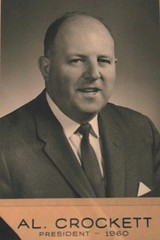
When the club became homeless, Crockett negotiated with the city for the use of a city-owned Kinsmen playground located at Burnell Street and St. Matthews Avenue so that it could carry on basic programming.
The site was smaller than what Orioles was used to and had a "knock down shack" as its clubhouse. Some of its hockey teams and all of its baseball teams played at other locations around the neighbourhood. The lacrosse team was banished from the site when neighbours complained about the number of balls that came flying into their yards during practice.

February 18, 1949, Winnipeg Free Press
If providing this land was meant to entice Orioles into operating one of the new community clubs, it did not work. A Winnipeg Tribune article noted, "For the past 15 years the West End Orioles Club has provided hockey and skating facilities for boys in the area but it has been considered more practical to organize a proper community centre to better serve the district."
In early February 1949, the city put out a call to groups that might be interested in operating a community club in this part of the West End and offered up the Burnell and St. Matthews land as a home base. The catchment area was from Portage to Sargent avenues, between Sherbrook and Wall streets - a total of 4,500 homes.
One group that expressed interest was Home Street United Church, and not wanting to lose a second home base in little more than a year, Orioles changed its mind and came to the table.
In February 1949, a twelve-person committee made up mainly of Orioles members met with the city to discuss “...a name for the club, definite boundaries, methods of financing, social and sporting activities, handicrafts, music and drama.”

The new community club held its founding meeting at General Wolfe School on May 25, 1949, and elected Cecil Pratt as its president. It also accepted an offer from the Broadway Lawn Bowling Club at Wolever Avenue and Greenwood Place to use its clubhouse as a workspace, and approved temporary locations for its summer sports activities.
The West End Athletic Association held its annual meeting in November 1949 and re-elected Al Crockett as its president. The two groups existed together for another year or so.
(The name "Orioles West End Community Club" lasted only until June 1951. The club agreed to drop "West End" as two other organizations, West End Athletic and West End Memorial, also used it. The new name became "Orioles Community Club".)

Burnell Street view ca. 1950 (City of Winnipeg Archives)
Soon after its election, the board created a fundraising committee and a women's executive. Plans were made to add girls' sports, and new programming, such as handicraft classes, a whist club and musical events, were held at area schools while work on a permanent clubhouse got underway.
In the summer of 1949, the club purchased a 26 foot by 62 foot surplus military "H-hut" located off Portage Avenue, where it sat until city funds to dig a foundation, basement and make other improvements to the site were approved. The money never came, so a delegation from the club appeared at a September 1949 parks board meeting to ask why. It found that there was a misconception about the club and its hockey teams that almost saw it struck off the city's community club list.
Thanks to connections made through former president Stan Evans and former coach Hoss Nicholson, the West End Orioles had a number of sponsorship and player exchange agreements with higher-level teams. For instance, it was an unofficial farm team to Hoss Nicholson's Brandon Elks that in 1946 signed on as part of the Minneapolis Millers' farm team system. The Millers, in turn, were part of pro-hockey's Cleveland Baron's farm system.
Some on the parks board questioned why the city would provide scarce recreation funds to a club affiliated with a pro-hockey team. The delegation explained that there was no direct link between the Orioles and Barons, and the only benefit its teams received anymore was the ability to piggyback on some sports equipment procurement deals that the senior clubs had.
The parks board reconsidered its position and granted the club $605 to finish its work.
In the summer of 1949, the club purchased a 26 foot by 62 foot surplus military "H-hut" located off Portage Avenue, where it sat until city funds to dig a foundation, basement and make other improvements to the site were approved. The money never came, so a delegation from the club appeared at a September 1949 parks board meeting to ask why. It found that there was a misconception about the club and its hockey teams that almost saw it struck off the city's community club list.
Thanks to connections made through former president Stan Evans and former coach Hoss Nicholson, the West End Orioles had a number of sponsorship and player exchange agreements with higher-level teams. For instance, it was an unofficial farm team to Hoss Nicholson's Brandon Elks that in 1946 signed on as part of the Minneapolis Millers' farm team system. The Millers, in turn, were part of pro-hockey's Cleveland Baron's farm system.
Some on the parks board questioned why the city would provide scarce recreation funds to a club affiliated with a pro-hockey team. The delegation explained that there was no direct link between the Orioles and Barons, and the only benefit its teams received anymore was the ability to piggyback on some sports equipment procurement deals that the senior clubs had.
The parks board reconsidered its position and granted the club $605 to finish its work.

September 22, 1950, Winnipeg Free Press
A sod turning ceremony took place on September 21, 1950, and construction on the foundation got underway. The hut was laid down on November 3, and interior renovations began.
The army hut was converted into what the Winnipeg Tribune called "a cheery, compact home" with a main activity space, canteen and full basement. It was painted cream with rust coloured details and apple green ceilings.

February 2, 1951, Winnipeg Free Press
Around 200 people gathered to watch Mayor Garnet Coulter cut the ribbon to officially open the Orioles Community Club at 2 p.m. on Thursday, February 1, 1951. It was followed by a tea hosted by Mrs. Coulter.
Other dignitaries in attendance were: T. Hodgson, parks board superintendent; Charles Barbour of the recreation department; Adam Beck, school trustee; alderman James Black, who was also honourary president of the club; and W. Easton, club president.

St. Matthews Avenue view, ca. 1950 (City of Winnipeg Archives)
Next: Part 3: Orioles Community Club (1950 - 1970s)
No comments:
Post a Comment