Local News Links:... .........................

Friday, 30 March 2012

A history of Orioles Community Club - Part 4

© 2012, Christian Cassidy. UPDATED 2026!
The clubhouse for Orioles Community Club, now Valour Community Centre - Orioles Site, turns 75 in 2026!  To celebrate, I've gone back to this 2012 blog series and made updates to links, images and information as there is a lot more archival material available online today.


Orioles ca. 1979, showing both H-huts (City of Wpg Archives)

Orioles Community Club started the 1970s with a new name: Orioles Community Centre.

Starting in 1969, the city's ads and notices began referring to the venues as "Metro Winnipeg Community Centres". This was further entrenched in 1971 when the General Council of Winnipeg Community Centres was created to act as an arm's-length body between city council and the centres to provide funding and other resources.

Individual clubs changed their names to centres, but for early ones that had been known as clubs for 20 years or more, the terms centre and club were used interchangeably for years.

The 1970s were a busy decade for Orioles Community Centre.


The centre's catchment area reached 22,000 people and was one of the largest in the city. Programming expanded to include everything from drama classes to gymnastics, and it utilized not only the Burnell Street clubhouse, but also area schools such as John M. King, Sargent Park and Greenway.

Dozens of teams played out of the club each year. In 1971-72, an additional rink was added to the north grounds of the centre and the following season it entered a total of 18 hockey teams in city leagues.

In 1973, Orioles celebrated its 25th anniversary with a carnival, midway and street parade. It ended in style with a 25th anniversary dinner and dance at the Maryland Hotel.

November 22, 1987, Winnipeg Free Press Weekly

A full-sized gymnasium was built at the west end of the site in 1987.  It was named in honour of
Charlie Barbour, the man who established the community club system some forty years earlier. He died in 1975, but members of his family were on-hand for the dedication ceremony.

The gym was a game-changer for Orioles as it could repatriate many of its programs from nearby schools, and offer new ones. In terms of fundraising, it could be used for large bingos, teas and be rented out for socials.

All of the activities that began in the 1950s continued through the 1970s and 1980s, with some variations.

It
 should be noted that tracking community club activities gets more difficult from the 1970s onwards.  The larger number of clubs meant they were less of a novelty, and extra space in the sports pages of the daily papers competed with professional, university or high school athletics. During this time, several community newspaper sprung up that picked up the slack.

The Majorettes continued to grow in popularity. In 1977, Orioles sponsored its first Baton Camp that brought in national champions from the U.S. and Canada to teach children and instructors.

The music program moved away from being a marching band to a drum corps and a drum and bugle band.

The two continued to perform together. Above is a 1974 photo of the drum corps and majorettes before a trip to St. Paul, Minnesota, where they placed fifth for best performance.

February 1, 1979, Winnipeg Free Press

The winter and summer carnivals also carried through the 1970s and into the 1990s, and their popularity extended beyond the Orioles catchment area.

The summer festival often included a midway in the park space behind the club and the addition of the gym allowed more indoor activities.

The winter carnival also remained popular and hosted more events thanks to the gym. The hockey tournament associated with the festival weekend became a sponge hockey tournament in 1987.

April 25, 1974, WInnipeg Free Press Weekly

In terms of sports, hockey in winter and baseball in summer remained as popular as ever, but they were joined by new entries.

In 1970, the Fort Garry Community Club brought a new sport to Winnipeg called ringette. The province sponsored demonstrations in the hopes that it would catch on as a winter sport for girls (previous attempts at girls' hockey had failed.) Other clubs began playing in 1972, and by 1976 Orioles had several teams at different age levels.

In the early 1980s, sponge hockey tournaments were held at the club and continued for years to come.


The Dynamo Boxing Club relocated to Orioles in 1989. The centre hosted a number of Golden Gloves tournaments that attracted boxers from the prairie provinces and neighbouring states.

The Orioles Boxing Club, which is still active, was formed in 1994 under Reg Bruno. The club has produced several national champions, including
Ryan Savage, David Lao and Roberto Romero. In 2011, Julio Escorcia Jr. was sliver medallist at the Canada Winter Games. 

In a January 20, 1991 Winnipeg Free Press Weekly article, former Orioles president Harry Burdon spoke about a growing problem faced by most community clubs and similar organizations: "You've got your few people that do everything and the rest just sit back and expect (things to be done)." He said what kept Orioles going was a dedicated core of people, "There's tradition with the Orioles. We have guys who have been here 30 and 40 years..."

As the 1990s continued, Orioles faced the same pressures. That first generation of 30 and 40-year volunteers began aging out. Demographics in the catchment area also began changing, with a drop in homeownership rates and an increase in new immigrant and Indigenous families.


September 9, 1998, Winnipeg Free Press

At the start of the noughties, Orioles had the second largest catchment area of any community club in the inner city at 13,870 (1). In the neighbourhoods it served, St. Matthews, Spence and parts of Daniel McIntyre, the average family income was 57% of the city average, and the rate of single-parent households was the highest in the city at 31% (2).

Programming at the club changed due to a lack of volunteers and to reflect the needs of the neighbourhood. Organized sports and dance classes made way for youth drop-ins and a free lunch program. In 2000, the Orioles Learning Centre, which taught basic literacy, GED and job-finding skills, opened.

Orioles Community Club
The City of Winnipeg released its Public Use Facilities Study (PUFS) report in July 2004. It examined the condition and usage at all city recreation facilities.

It made several recommendations regarding the West End, including an expansion of the Sargent Park Recreation Centre (now Cindy Klassen Recreation Complex), a possible new community centre at Portage and Sherbrook (that did not happen),  and the closure of the Orioles' wading pool (which did happen for a time).

There was a catch to the suggested improvements, though. "
Mayor Sam Katz has maintained neighbourhoods won’t get new facilities unless they voluntarily close some old ones.
" (Feb 18, 2005, Winnipeg Free Press.) This led to a some community centre closures or amalgamations around the city.

During the debate over what should happen in the West End, O
rioles received a major funding blow. The weekly CNIB Bingo, which earned the centre about $26,000 per year, relocated in 2005 due to the smoking ban at city facilities.

Amalgamation talks began in 2006 between three West End community centres: Isaac Brock (catchment area 5,050); Clifton (catchment area 4,820); and Orioles (catchment area 13,855).

An agreement was finalized in December 2006 that created the Valour Community Centre based out of the Isaac Brock site. It was noted that, "The Isaac Brock and Clifton sites both serve one neighbourhood each, Minto and Sargent Park respectively, and split the Polo Park area between them. Orioles serves St. Matthews, Spence, and a portion of the Daniel McIntyre neighbourhood." (1)

Orioles was rechristened Valour Community Centre - Orioles Site.

In 2007, the Daniel McIntyre / St. Matthews Community Centre, funded by the province's Neighbourhoods Alive! program, established offices in the basement of Orioles. DMSMCA, now known as the West End Resource Centre, moved to a larger space at the former West End Library in 2011, but two of the programs it created remain on the property.

One is the Orioles Bike Cage (2009) in the wading pool changing shack north of the centre. The responsibility of the cage was transferred to the Valour Community Centre around 2020. The other is the community gardens (2009) on the south side of the centre, which are still maintained by WERC.

The tradition of an annual winter carnival was also resumed with some summer festivals as well.

UPDATE
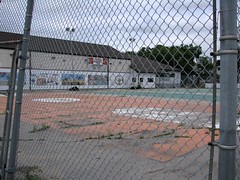
In 2017 - 2018, the grounds on the south end of the site, which in a bygone era were tennis courts in summer and skating rinks in winter received an extensive renovation to create a new public park and a larger community gardens area. The following year, it got a new exterior paint job.

In June 2025, the West End Resource Centre and Trees Winnipeg planted three new trees in the park north of the centre.

References: 
(1) The Valour Community Centre Orioles Site in Transition
(2) Plan 2025 General Council of Winnipeg Community Centres
See my photo album of Orioles Community Club!

Next: Part 5 Lists and History Show and Tell

Wednesday, 28 March 2012

A history of Orioles Community Club - Part 3

© 2012, Christian Cassidy. UPDATED 2026!

The clubhouse for Orioles Community Club, now Valour Community Centre - Orioles Site, turns 75 in 2026!  To celebrate, I've gone back to this 2012 blog series and made updates to links, images and information as there is a lot more archival material available online today.


  https://winnipeginfocus.winnipeg.ca/i03028
St. Matthews Avenue view, ca. 1950 (City of Winnipeg Archives)

As a city-funded community club, Orioles had to offer a wide range of activities that appealed to every age level. In 1950, activity committees were created for seniors, children and teens, but most indoor programs were held at other locations until the clubhouse was ready to occupy, likely in late December 1950 or January 1951. (It officially opened on February 1, 1951)

Even without the clubhouse, its hockey program continued through the winter of 1949 - 1950 at the site, and on March 1,  1950, it hosted its first Winter Carnival, an event that would continue annually for more than 40 years.

Activities in the 1951 - 52 season, its first with a clubhouse,  included numerous inter-club hockey, softball, basketball and volleyball teams. For children and youth, there were handicraft classes, game days and dances. Dance lessons, skit clubs, and book/comic exchanges proved popular for all ages. There was also a weekly seniors drop-in, a Friday family movie night, and a weekly whist tournament. 

Orioles Jersey logo ca. 1956-57

The total 1951 - 1952 winter attendance at Orioles Community Club was more than 11,000 people. 
In January 1952 alone, it hosted 53 events. 

The club often had to turn people away from events. Its 26-foot by 62-foot clubhouse was not adequate to serve a catchment area of 4,500 homes filled with growing families.

A building fund was established in November 1951, and the board passed a motion to set aside 10% of revenues from any source, such as canteen sales and hall rentals, to that fund. It also raised funds through a Christmas tea and a
door-to-door canvas.


Orioles ca. 1979, showing both H-huts (City of Wpg Archives)

The fundraising efforts paid off, and in September 1952, the club purchased for $1 another H-hut, this one was surplus RCAF property located at the airport. It cost another $2,500 to move it down St. Matthews Avenue and bring it to the site.

A work party to move the new building next to the existing one took place on November 16, 1952. The full project, which included adding a basement and plumbing to the new wing and interior construction, was completed over the course of a year.

The first event held in the new space was a community talent show on November 22, 1952 that drew 200 community members.

Rob Storry served as Orioles Community Club president from 1952 - 53 to 1955 - 56 and oversaw the rapid expansion in the club's attendance and programming.

The West End's population grew rapidly thanks to the baby boom. This led the city to add a new community club in the area under its community club program.

The Isaac Brock Community Club was established in 1954, though its roots date back to a club of the same name established in 1919 that operated out of Isaac Brock School. In 1921, an affiliated Isaac Brock Community Club Athletic Association was created. Both were merged into the new city-funded entity.


May 5, 1960, Winnipeg Free Press

The city realigned the community club catchment areas in 1959, which trimmed the Orioles western boundary from Wall Street to Dominion Street. This led to conflict at times between the two clubs.

Isaac Brock complained to the city in 1960 that Orioles was targeting people in its catchment area for programming and fundraising. Orioles countered that after a decade of service, many of its members, including two of its five executive members, found themselves on the other side of the boundary and that residents should decide which club they want to participate in.

The fight lasted most of the year, and in the end, Orioles was told to cease canvassing the area. (A similar battle involving Orioles, Isaac Brock and Clifton community clubs arose in 1971 when the latter had its territory expanded.)

Orioles ca. 1970s, City of Winnipeg Archives

Orioles and several other early community clubs received money from the city in 1964 for renovations and expansion. 

Tenders were let in June and the new space was officially opened on Friday, November 20, 1964 at 7:30 pm followed by a tea convened by Mrs. E W Lawrence. the opening coincided with the organisation's 15th anniversary, (though the clubhouses itself opened in 1951). The celebrations featured a street parade and gala dinner at the Maryland Hotel.

Here are some Orioles programming and events from the 1950s and early 1960s:

WINTER CARNIVAL
One of the earliest events hosted by the club was a Winter Carnival on March 4, 1950. It was held on the grounds using the city shack as a headquarters. The carnival continued to be an annual Orioles event into the 1990s.  

As the indoor space became available, the carnival featured displays from all of the Orioles clubs, from figure skating to dance recitals. Hockey (and later broomball or ringette) tournaments were usually held in conjunction with the carnival, as was an evening dance. 

The carnival was also a time to choose Miss Orioles, a contest that all community clubs participated in. 

Above is 1950 Miss Orioles Marjorie Blake, who went on to become Miss Winnipeg that year. (For a list of Orioles Queens see the lists section.)

As the population of its catchment area grew, the programming at Orioles grew with it.

The club did this under the guidance of George Hamende, the club's longest serving president from 1965 - 66 to 1972 - 73. He dedicated 35 years of his life to the club, doing everything from coaching to organizing teen dances, and held most executive positions on the board numerous times.


HAPPY HOUR CLUB
On January 15, 1951, the Happy Hour Club was created. It was a seniors drop-in held on Tuesday afternoons and was initially run by Mrs. P. Fellows, Mrs. E. Knudson, Mrs. T. H. Jonasson and Mrs. A. Miller. It started with just 17 members, but within a year had 100 members, and by the mid-1950s there were over 200.

Activities varied from week to week. There were game days that included checkers, chess and whist. Sometimes it was handicrafts or music and dance lessons. Often, performers were brought in to give a recital or lead a singalong. The afternoon always ended with a hot lunch.

The Happy Hour Club lasted into the late 1970s. 


DANCING
A popular activity for all ages that began in 1951 was dance classes. For the older crowd, square dancing was the rage. What began as a single class offered in 1951 grew to five classes and 200 participants in 1953. Its popularity continued through the 1960s.

For the younger children, tap and jazz dance classes were offered. Orioles performed at city and provincial dance recitals though to the 1990s.

MUSICAL BAND AND MAJORETTES
In the mid-1950s came the music program. By 1958 Orioles boasted a 70-piece marching band that performed around the city and went as far afield as North Dakota. By the 1970s, the band program consisted of a drum and bugle corps.

Around the same time, Majorettes (baton twirling) was also introduced. Through the 1960s to early 1980s, Orioles was a major hub for baton twirling in Winnipeg. It put on annual camps that attracted national-level twirlers.

The 
Majorettes and Drum Corps went to a competition in St. Paul, Minnesota together in 1974 and captured 5th place.

SPORTS

Though hockey was still king, Orioles branched out into a wide variety of sports. In 1955, it entered 22 teams into city leagues for hockey, basketball, lacrosse, volleyball, baseball and softball.

SPORTS - Hockey

Hockey continued to be a big draw for the club but with an increasing number of community clubs, it was tougher to create a dynasty.

In 1950 - 51, Orioles entered five teams into city hockey leagues: Tom Thumb, Bantam A, Bantam B, Midget and Juvenile. The best of the bunch was the Juvenile team that lost out to the provincial championship to the Winnipeg Monarchs. The team, however, dominated the league and the Free Press' All-Star team named at the end of the season. Sandy Morrison was named the Winnipeg Juvenile Hockey League's MVP.

The Juveniles came runner-up the next season as well. Despite finishing top of the league for most of the 1950s, it appears that the coveted provincial title did not return to Orioles until 1965 - 66 and again in 1968 - 69.

SPORTS - Baseball

From 1955 - 1964 Orioles won five Junior baseball championships, thanks in part to their all-star pitcher Robert Hunter.

SPORTS - Basketball
Orioles Women Basketball
Starting in 1951, women's basketball, softball and volleyball teams were created.

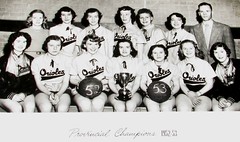
In the 1950s, the Junior Girls basketball team created a dynasty that rivalled that of the old club's 1940s hockey teams. In 1952 - 53 they took the city championship, beating St. Vital 58 - 35. Ruby Hoski scored 28 points and June Kozak scored 17.


April 15, 1955, Winnipeg Free Press

In 1955, the team topped the league again. Irene Morris, Joan Cox and Pat Murphy made the Free Press' "Dream team" lineup. They won the title three more times that decade. (Image: Apr. 15, 1955, Wpg Free Press.)

BOOKMOBILE
In 1953, the city's library department recommended a travelling "bookmobile" for underserved areas of the city, uch as the West End.

Orioles Community Club, through its Women's Auxiliary, were vocal supporters of a bookmobile and appeared as a delegation before city committees at every step in the formation of the program. When it was finally introduced circa 1953, Orioles became one of the stops for Bookmobile Number 1.

In the early 1960s the stop was moved to Ellice and Arlington where, in 1966, a permanent West End library branch was built. (Image: July 28, 1955, Winnipeg Tribune)

OTHER PROGRAMMING
Thousands of events took place at Orioles over the 1950s to early 1970s. These include movie nights, whist tournaments, singing recitals, games nights, concerts, and many more!

Next: Part 4 - Orioles Community Centre (1947 - 1950)

Friday, 23 March 2012

A history of Orioles Community Club - Part 2

© 2012, Christian Cassidy. UPDATED 2026!
The clubhouse for Orioles Community Club, now Valour Community Centre - Orioles Site, turns 75 in 2026!  To celebrate, I've gone back to this 2012 blog series and made updates to links, images and information as there is a lot more archival material available online today.

The West End Orioles Athletic Association found itself looking for a new home after the 1947 - 48 hockey season, just as the the city was establishing a new recreation department. 

A wartime upswing in juvenile delinquency, blamed on fathers being overseas and many mothers having to work outside of the house and care for older children, brought youth issues to the top of the city's agenda. In January 1944, city council formed a working committee with the Council of Social Agencies to study ways to combat youth crime. 

At the inaugural meeting, a wide range of solutions were touched on, ranging from curfews to hiring more police. Alderman H. Scott refuted these calls and said: "The way to cope with the situation is to spend a little money and organize community sports clubs and recreation centres for the children." He held up the West End Orioles Athletic Association as an example of what could be done with very little money.

After studying the issue, the committee found that after nearly two decades of Depression and war, recreational offerings in the city were an uneven patchwork funded by the city (through the parks department), school boards, private clubs, religious groups and service organizations. In some cases, similar services were being provided on the same block, while other neighbourhoods went without.

Most of the organisations involved in providing recreation services, and others that wanted to get into it, agreed that the current system was flawed and that better organisation and city oversight were needed.


May 7, 1946, Winnipeg Tribune

The city agreed to establish a recreation department and in May 1946, appointed Charles Barbour to run it. He had been head of intramural sports for Montreal's high schools and co-presented a leadership program for 48 area recreation directors. 

A $300,000 recreation bylaw was approved by voters in the November 1946 civic election to give Barbour a pool of money to work with.

One of Barbour's first tasks was to create an evenly distributed network of around 48 city-funded, but community-run "community clubs". 

To create the system as quickly as possible, he reached out to many existing recreation centres and athletic associations to see if they wanted to become one of these new clubs. The upside was guaranteed funding, but the downsides were a loss of independence and the requirement to provide a range of programming, not just sports, to a wider segment of the community.

Orioles Community Centre
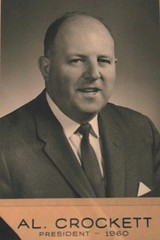
One of the clubs that Barbour approached was the West End Orioles Athletic Association, now headed by Al Crockett.

When the club became homeless, Crockett negotiated with the city for the use of a city-owned Kinsmen playground located at Burnell Street and St. Matthews Avenue so that it could carry on basic programming.

The site was smaller than what Orioles was used to and had a "knock down shack" as its clubhouse. Some of its hockey teams and all of its baseball teams played at other locations around the neighbourhood. The lacrosse team was banished from the site when neighbours complained about the number of balls that came flying into their yards during practice.


February 18, 1949, Winnipeg Free Press

If providing this land was meant to entice Orioles into operating one of the new community clubs, it did not work. A Winnipeg Tribune article noted, "For the past 15 years the West End Orioles Club has provided hockey and skating facilities for boys in the area but it has been considered more practical to organize a proper community centre to better serve the district."

In early February 1949, the city put out a call to groups that might be interested in operating a community club in this part of the West End and offered up the Burnell and St. Matthews land as a home base. The catchment area was from Portage to Sargent avenues, between Sherbrook and Wall streets - a total of 4,500 homes.

One group that expressed interest was Home Street United Church, and not wanting to lose a second home base in little more than a year, Orioles changed its mind and came to the table. 

In 
February 1949, a twelve-person committee made up mainly of Orioles members met with the city to discuss “...a name for the club, definite boundaries, methods of financing, social and sporting activities, handicrafts, music and drama.

In May 1949, Orioles presented a plan to the city outlining how West End Orioles Athletic Association would transition into the "Orioles West End Community Club". 

The new community club held its founding meeting at General Wolfe School on May 25, 1949, and elected Cecil Pratt as its president. It also accepted an offer from the Broadway Lawn Bowling Club at Wolever Avenue and Greenwood Place to use its clubhouse as a workspace, and approved temporary locations for its summer sports activities.

The West End Athletic Association held its annual meeting in November 1949 and re-elected Al Crockett as its president. The two groups existed together for another year or so.

(The name "Orioles West End Community Club" lasted only until June 1951. The club agreed to drop "West End" as two other organizations, West End Athletic and West End Memorial, also used it. The new name became "Orioles Community Club".)


Burnell Street view ca. 1950 (City of Winnipeg Archives)

Soon after its election, the board created a fundraising committee and a women's executive. Plans were made to add girls' sports, and new programming, such as handicraft classes, a whist club and musical events, were held at area schools while work on a permanent clubhouse got underway.

In the summer of 1949, the club purchased a 26 foot by 62 foot surplus military "H-hut" located off Portage Avenue, where it sat until city funds to dig a foundation, basement and make other improvements to the site were approved. The money never came, so a delegation from the club appeared at a September 1949 parks board meeting to ask why. It found that there was a misconception about the club and its hockey teams that almost saw it struck off the city's community club list.

Thanks to connections made through former president Stan Evans and former coach Hoss Nicholson, the West End Orioles had a number of sponsorship and player exchange agreements with higher-level teams. For instance, it was an unofficial farm team to Hoss Nicholson's Brandon Elks that in 1946 signed on as part of the Minneapolis Millers' farm team system. The Millers, in turn, were part of pro-hockey's Cleveland Baron's farm system.

Some on the parks board questioned why the city would provide scarce recreation funds to a club affiliated with a pro-hockey team. The delegation explained that there was no direct link between the Orioles and Barons, and the only benefit its teams received anymore was the ability to piggyback on some sports equipment procurement deals that the senior clubs had. 

The parks board reconsidered its position and granted the club $605 to finish its work.


September 22, 1950, Winnipeg Free Press

A sod turning ceremony took place on September 21, 1950, and construction on the foundation got underway. The hut was laid down on November 3, and interior renovations began.

The army hut was converted into what the Winnipeg Tribune called "a cheery, compact home" with a main activity space, canteen and full basement. It was painted cream with rust coloured details and apple green ceilings.

February 2, 1951, Winnipeg Free Press

Around 200 people gathered to watch Mayor Garnet Coulter cut the ribbon to officially open the Orioles Community Club at 2 p.m. on
 Thursday, February 1, 1951. It was followed by a tea hosted by Mrs. Coulter.

Other dignitaries in attendance were: 
T. Hodgson, parks board superintendent; Charles Barbour of the recreation department; Adam Beck, school trustee; alderman James Black, who was also honourary president of the club; and W. Easton, club president.


  https://winnipeginfocus.winnipeg.ca/i03028
St. Matthews Avenue view, ca. 1950 (City of Winnipeg Archives)

Next: Part 3: Orioles Community Club (1950 - 1970s)

Friday, 16 March 2012

A history of Orioles Community Club - Part 1

© 2012, Christian Cassidy. UPDATED 2026!

The clubhouse for Orioles Community Club, now Valour Community Centre - Orioles Site, turns 75 in 2026!  To celebrate, I've gone back to this 2012 blog series and made updates to links, images and information as there is a lot more archival material available online today.


November 23, 1938, Winnipeg Tribune

The origins of Orioles Community Club date back to the 1930s, a time when fielding sports teams and in some cases organising leagues was left up to churches, social service groups, and privately-run sports clubs or athletic associations. Through the decade, the West End was well-represented in various lacrosse/boxla, cricket, and hockey leagues with teams such as the Rangers, Argos, and Elks. 

The first newspaper mention of “West End Orioles” was ain a November 1938 notice that it was holdings for two bantam hockey teams at their clubhouse on Burnell Street. 

The organisation that fielded the Orioles was a private sports club known as the West End Orioles Athletic Association. It was formed that year with Charles William "Pop" Regelous as its president.

November 14, 1939, Winnipeg Free Press

Regelous was born in 1898 in Sydney, Manitoba, and served in the First World War before settling in Winnipeg and starting a 20-year career with Crane Supply. He was a long-time amateur sports supporter in the city, especially in curling and hockey, before starting the association. 

The name is likely taken from the Baltimore Orioles baseball team, though not the MLB franchise we know today. Baltimore has had three baseball teams by that name, and one of them played in the International League from 1916 - 1953. That league was covered regularly in local newspapers through wire stories, including the Orioles' playoff runs in 1936 and 1937. 

Not a lot is known about the makeup of the athletic association, but there were other Regelous family members involved. Doug, Pop's son, was captain of the younger Bantam B team and Pop's brother, Tom was a manager/coach.

Both Orioles bantam hockey teams played well in their inaugural year, and lacrosse teams were organised in the spring.


Canada Bread in 1915, (Courtesy R. McInnes)

Home base for the West End Orioles was Canada Bread Field, located north of its large bakery on Burnell Street. From 1926 to 1939, this was home to the Winnipeg Commercial Diamond Ball League, which claimed to be the country's largest corporate baseball league with 17 teams.

In the winter, Orioles flooded a rink and used a pair of old box cars as a clubhouse and warming shack. Improvements were made to the site in its early years, such as overhead lighting, which allowed for evening games and public skates, and its own water source to make flooding easier.

The upgrades allowed Orioles to add more teams in the midget and intermediate leagues, and the club was on its way to becoming a hockey powerhouse.


On the coaching front, Horace "Hoss" Nicholson was brought aboard for the 1939 - 40 hockey season.

Nicholson, an electrician for the City of Winnipeg, quickly gained the respect of those in local hockey circles. Winnipeg Free Press sports columnist Ken McKenzie wrote that Hoss was:  "... without a doubt the most enthusiastic coach in the loop. Every time his team scores, or does anything which he particularly likes, Hoss will throw his hat high in the air with jubilation. Hoss uses up more energy in a single game than does any of his players. He seems to have put his pep and enthusiasm into his players and it is seen in their spirited play." (Winnipeg Free Press, January 10, 1942).

Orioles won its first of many championships, 
the provincial Intermediate League title, under Hoss. Its  Bantam A team finished in third place. 

In 1941, the club added a midget team to its lineup and barely a month into its inaugural season, it was in third place in the league. The Winnipeg Free Press' Ken McKenzie wrote that they were "...the surprise team of the season..." and were "...playing the most aggressive, inspired hockey in the midget league for some time."

April 4, 1942, Winnipeg Tribune

Sadly, the man who started the club and served as president since its inception would not get to enjoy many of its successes.

Regelous was re-elected club president for a fifth year in November 1941, but sports columnist Vince Leah noted weeks later that, "Charlie Regelous is still a very sick man and we've heard nothing about (the future of) West End Orioles."  Another sports page noted that Regelous spent the winter "flat out on his back".

Regelous died on April 3, 1942, at the age of 44. Four days later, 500 people, many from the local amateur sports community, attended his funeral at St. Matthews Church. 

Vince Leah wrote, "Charlie was a fellow who went to bats for the kids to the extent of sacrificing time, money and energy in copious quantitates. The West End Oriole club was one of the best minor outfits in the city, thanks to Charlie."

The club's hockey program resumed the following year. Nicholson told reporters that it was Regelous'  wish "that the kids stay together."

Wartime Orioles

As the team struggled with the illness and death of its founder, dozens of its members past and present dealt with their own life and death situations in the Second World War.

In February 1940, the club held a dance in honour of ten current Orioles members who had enlisted. At least two former players, Pilot Officer David Wilson and Sgt William Duthie, did not come home. Sargent Alan Hackett did, but with severe injuries.

The war created a crisis for most sports teams and leagues in the city. Many downsized or even suspended play due to a lack of men.

Eager for new blood, hockey teams from as far away as New York and Hamilton came to Winnipeg to sign up players. The problem became so bad that in 1944, officials from the various leagues and clubs met at the Amphitheatre to discuss the matter. They decided to reject the vast majority of out-of-town transfer requests, including a couple involving Orioles players.

1940s Orioles

Despite the player shortages and their boxcar clubhouse being severely damaged by fire in December 1943, the West End Orioles continued to field lacrosse and hockey teams. There were even newspaper mentions of soccer and baseball teams fielded under the Orioles banner.

It was hockey where Orioles continued to have its most success. 

In the 1942-43 season, Hoss Nicholson coached both the St. James Canadians to the juvenile hockey championship and the West End Orioles to the midget hockey championship. In the 1943-44 season, Orioles won the Bantam A championship.


The 1944-45 season was a banner year for the club. Of the four teams entered into local hockey leagues (Midget, Bantam A, Bantam B and Juveniles), three of them won provincial championships. The Juveniles, who finished their season with a 20-1-1 record, went on to Moose Jaw in April 1945 and took the Western Canadian Juvenile hockey crown 

With such an impressive record, Hoss Nicholson was wooed away from amateur hockey. He was already doing double duty with the Orioles and St. James Canadians, and in the 1946-1947 season, he coached the Brandon Elks.

In subsequent years, Nicholson was a coach/manager of the Winnipeg Monarchs and Winnipeg Canadians,  then had a career in scouting for the Boston Bruins and New Westminster Bruins.

Nicholson died on May 29, 1984, at the age of 68.


Stan Evans

In spring 1945, Stan Evans began an ambitious relationship with the club.

Evans ran Stan Evans' Style Shop, a men's clothing store, in the Avenue Building on Portage Avenue and was an avid sportsman who sponsored many local teams and leagues. before his involvement with the West End Orioles, he sponsored a provincial softball team named Stan Evans and co-created a small senior hockey league in which his Stan Evans' Stylists played. 


At the West End Orioles' banquet dinner in spring 1945, club president Russ Ball announced that Evans was the new financial sponsor of the club.

That summer, its lacrosse and soccer teams played under the name 
Stan Evans Orioles. The same went for its slate of hockey teams.

Stan Evans Orioles

Admitting that he had little experience running hockey teams, Evans said that he would bring back Hoss Nicholson (he didn't) and hired Art Barnett and Jimmy Kennedy as co-coaches. The latter had helmed championship teams with the Winnipeg Monarchs organization. Bill Webber, also from the Monarchs, became the club's manager.

Evans made it clear that the Stan Evans Orioles were looking for championships: “We are going out for titles in all divisions this coming season. This is no fly-by-night club. We have formed and we are in the game to stay.” (Winnipeg Free Press, August 27, 1945.)

After the War, sports leagues bounced back, and Evans reached beyond the traditional leagues that the West End Orioles had played in. There was a Stan Evans Orioles in the Commercial Hockey League and in the senior hockey league.

Evans then set his sights on Junior hockey. After pursuing the St. James Canadians for a couple of months, Evans managed to trigger a merger between them and one of the Orioles new junior clubs. In October 1945, he was president of the newly christened St. James Orioles that would be operated arms-length from the club.

Despite his deep pockets and ambitious plans, the only title won by any Stan Evans Orioles team, summer or winter sports, was the 1945 - 46 senior hockey team. They were city champions, but bowed out in the playoffs for the Western Canadian championship.


October 10, 1946, Winnipeg Tribune

There was another summer of Stan Evans Orioles baseball and lacrosse, then just as the 1946 - 47 hockey season was set to begin, Evans and his sponsorship abruptly ended. At an October 1946 meeting, Al Crockett, who had served as secretary under Evans, became the new president.

It's hard to tell what happened with the "Stan Evans experiment." There wasn't any media coverage of the withdrawal other than the above story noting the change in presidents and reversion to the West End Orioles name. 
Evans also pulled his sponsorship from the arms-length St. James Orioles and the Stan Evans soccer team.

It likely had to do with Evens' health. He died in 1948 at the age of 47, and his obituary noted that he had been ill for some time with a heart ailment.

Late 1940s  Orioles

With the cash injection and prominent coaches gone, it was time for Orioles to rebuild.

Romeo Rivers was appointed head coach in October 1947, and the Orioles put five teams on the ice: Midget, Juvenile, Intermediate and two Bantams. That year, they captured the Midget and Juvenile championships.

There was more off-ice drama to come that would put an end to Orioles as a private athletic club.

A new clubhouse and location that Evans promised for Orioles didn't happen before his departure. That was unfortunate, as it was announced in 1947 that he Canada Brad Field site, by that time owned by the city, was sold to the Valour Road Memorial Legion for a new hall and curling club.

Orioles was allowed to play out the 1947 - 48 hockey season. 

February 5, 1944, Winnipeg Tribune

Next: Part 2 - Transformation (1947 - 1950)