
 ..
.. ..
.. ..
.. ..
.. ..
.. ..
.. ..
.. .
. ..
.. ...
... ..
.. ..
..Monday, 31 October 2011
1964 CBC report on Winnipeg's 'new' airport !

Sunday, 30 October 2011
Looking back at Winnipeg's Airports (Part 2)
A three part look at Winnipeg's International Airports.
Part 1 Stevenson Field (1928 - 1963)
Part 2 Winnipeg International Airport 2 (1963 - 2011)
Part 3 The public art
Part 1 Stevenson Field (1928 - 1963)
Part 2 Winnipeg International Airport 2 (1963 - 2011)
Part 3 The public art
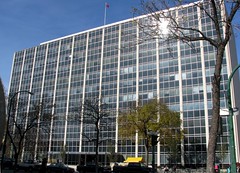
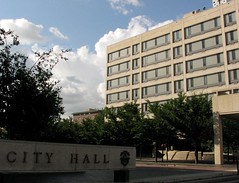
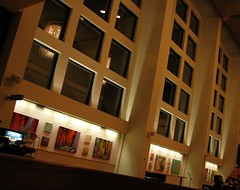
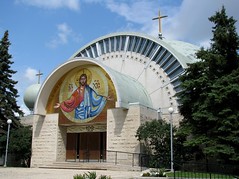
Other Winnipeg projects to that point included the Elizabeth Dafoe Library, Norquay Building and the Civic Centre. Later work included the Concert Hall, Manitoba Museum, Shaarey Zedek Synagogue and the Great West Life complex. (Click the above links for a longer list).
Airports were something new for the firm so chief designers David Thordarson and Bernard Brown spent a great deal of time traveling to the new jet-age airports that had recently opened in the United States to find what worked and what didn't.

It was initially thought that the "aeroquay" or hub and spoke design favoured by American airports was the way to go. After the initial drawings were done, they opted instead for the more easily expandable horizontal design. (It's not clear if that change was completely the firm's decision or brought about by Transport Canada).
Transport Canada had the designs through most of 1958 and 1959 but wanted to tinker with them to save costs. In the 1959 budget, Ottawa announced $63 m in airport development funding which included new airports for Edmonton, Toronto and $3 m to get the Winnipeg project started.

February 1, 1960, Winnipeg Free Press
In late January 1960, Transport Minister Gordon Hees and departmental officials flew to Winnipeg to meet with the Winnipeg - St. James Airport Commission to unveil the final plans. The project, estimated to cost $8.5m, included a terminal, administration building with tower, parking for 750 cars, a power plant and the necessary sewer and water infrastructure. The completion date was set as sometime in 1964.


Excavation began in Spring 1960 and construction on the terminal began in August. The contractor was Commonwealth Construction Co. of Winnipeg who had submitted the lowest bid.

November 9, 1963, Winnipeg Free Press
Construction ended a little ahead of schedule. In September airport manager Jack Smyth and his staff moved into the new building and other administrative staff trickled in after that. They prepared for a November 1963 opening.
If construction was ahead of schedule, the budget was out of sorts. I could not find a story about the costs but articles around opening day refer to it as "an $18 m airport" -up from the $8.5 m - $10 m quoted at the beginning of construction.
First Flight

November 13, 1963, Winnipeg Free Press
There were two 'first flights' to arrive on opening day, November 12, 1963.The first was the final flight out of the old airport. At 9:30 am a Trans-Canada Airlines Viscount departed with 30 members of the media, transportation officials and other dignitaries. It was piloted by Rene Giguere who was the first pilot hired by TCA 26 years earlier. After a quick tour over the city the Viscount landed at the new terminal.
Fifteen minutes later the first passenger flight arrived, a TransCanada Airlines flight from Montreal piloted by Capt. H. H. Russell, (a CP flight also from Montreal arrived 8 minutes later).
Mr. and Mrs Andison of Roslyn Crescent were the first passengers to disembark into the new Winnipeg International Airport terminal. It earned them a prize package from TCA !
Opening Ceremony

January 18, 1964, Winnipeg Free Press

The opening ceremonies took place on Friday, January 17, 1964 in front of an audience of about 1,200 people. There were the usual speeches from dignitaries ranging from Transport Canada officials, the Lieutenant Governor and the Mayors of Winnipeg and St. James.
The most poignant moment was when a new bust of Captain Stevenson was unveiled by his three sisters. The event was followed by a weekend-long open house and guided tours.
The Unveiling

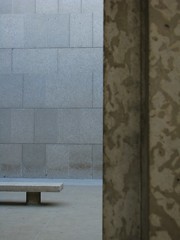
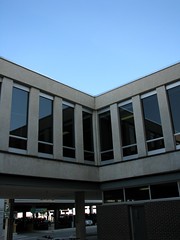
The administration building featured Manitoba Tyndall stone which gleamed white against the backdrop of the dark terminal.
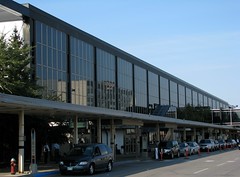
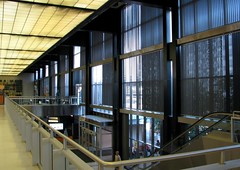
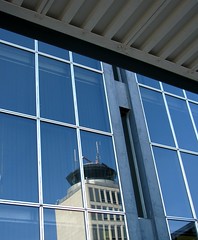
That facade of the terminal was a 58,000 square foot glass wall. A protective coating gave it an almost black appearance.
The interior featured the same sleek lines as outside. It included a 'floating' mezzanine level with seating for 400 waiting passengers. Directly underneath it was a 200 foot long, continuous counter.


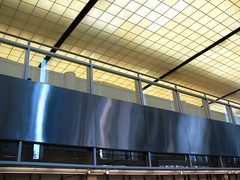
Looking up, there was 35,000 square foot illuminated ceiling which required 8,000 fluorescent bulbs to light. (There's a catwalk above the ceiling that allows access to the bulbs).
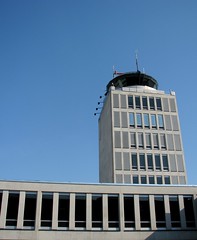
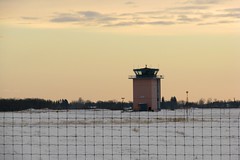
The 125 foot tall tower boasted $700,000 worth of the latest radar technology, a new purchase by Transport Canada for Canada's large airports made just months before the Winnipeg tower was to open.
One fan of the new airport was Sir Basil Spence who called it "a fine building." U of M architecture prof Theodore Matoff disagreed and wrote in the Winnipeg Tribune that the long, black glass wall shut the prairie out of the building.

For amenities, there was a restaurant, cocktail lounge, nursery, barbershop, TD bank, post office outlet, gift shop and a book shop. Lounges featured television chairs for passengers wanting to catch up on the news or their favourite television shows while waiting for a flight.
To give a sense of how far air travel has devolved in some ways, the airport featured five double and five single "roomettes" for transient passengers or those stuck on long layovers. These small rooms were a place to grab a snooze, quick shower or put the kids down for a nap while waiting for your flight. They lasted until at least late 1967.
Runway Safety
The airport still enjoyed a good safety record but the first people killed in at the facility happened months after the official opening. Two American passengers of a twin engine plane died when it flipped just meters after leaving the runway.


Renovations
Changes to the airport began shortly after opening.
In 1967, $500k was spent to add new escalators. The airport was built at the tail-end of the era when passengers boarded directly from the tarmac. Ottawa didn't install escalators at the apron end of the building and airlines didn't purchase the new 'people movers' to pick up passengers at the door of the plane and move them to the second level of the terminal. As a result, passengers had to walk a tall flight of stairs after disembarking.
The following year permanent bridges were also added to the rear.
 Public courtyard with art (source)
The building underwent a multi-million dollar renovation in 1984.
Contractors
Here is a list of some of the contractors that worked on the 1964 terminal. (Images taken from a couple of January 1964 Winnipeg Free Press editions.)


Architect: Green, Blankstein, Russell and Associates (David Thordarson and Bernard Brown, principle designers)
Construction Contractor: Commonwealth Construction Ltd
Ceiling lighting: Dominion Sound
Underground construction: Red River Construction
Glass: Westmacott Paint and Glass
Plaster: Halldor Sigurdson and Son
Interior Decor: Simpson's Sears, Commercial Division
Reference:
Winnipeg International Airport U of M Building Index (includes a lot of great photos!)
Tribune Archives (and here)Photos of airport
Airport History Winnipeg Airports Authority (with little mention of the 1964 terminal!)
The Winnipeg Airport Winnipeg Modern (excerpt)
Media:
Terminal Illness Winnipeg Free Press
Heritage Airport CityTV
A lesson the airport terminal can teach us West End Dumplings
Old terminal a modernist gem Winnipeg Free Press
Also, a 12 minute news documentary from CBC News in 1964 on the opening of the new airport !
Here is a list of some of the contractors that worked on the 1964 terminal. (Images taken from a couple of January 1964 Winnipeg Free Press editions.)


Architect: Green, Blankstein, Russell and Associates (David Thordarson and Bernard Brown, principle designers)
Construction Contractor: Commonwealth Construction Ltd
Ceiling lighting: Dominion Sound
Underground construction: Red River Construction
Glass: Westmacott Paint and Glass
Plaster: Halldor Sigurdson and Son
Interior Decor: Simpson's Sears, Commercial Division
Reference:
Winnipeg International Airport U of M Building Index (includes a lot of great photos!)
Tribune Archives (and here)Photos of airport
Airport History Winnipeg Airports Authority (with little mention of the 1964 terminal!)
The Winnipeg Airport Winnipeg Modern (excerpt)
Media:
Terminal Illness Winnipeg Free Press
Heritage Airport CityTV
A lesson the airport terminal can teach us West End Dumplings
Old terminal a modernist gem Winnipeg Free Press
Also, a 12 minute news documentary from CBC News in 1964 on the opening of the new airport !
Saturday, 29 October 2011
Looking back at Winnipeg's Airports (Part 1)
A three part look at Winnipeg's International Airports.
Part 1 Stevenson Field (1928 - 1963)
Part 2 Winnipeg International Airport 2 (1963 - 2011)
Part 3 The public art
Part 1 Stevenson Field (1928 - 1963)
Part 2 Winnipeg International Airport 2 (1963 - 2011)
Part 3 The public art
At 5:10 a.m. on Sunday, October 30, 2011, Air Canada flight AC256 will depart the new James A Richardson International Airport and will usher in a new era for Winnipeg air travel. (There is apparently a ribbon cutting at 11 am).
Here is a look back at Winnipeg's airports from 1928 to today. Part 1 looks at what began as Stevenson Airfield, part 2 looks at the recently closed Winnipeg International Airport terminal.
Early Days

Stevenson Field ca. 1928 (rareaviationphotos.com)
Winnipeg's first official airport was Stevenson Field (or Stevenson Aerodrome). It was opened by the Winnipeg Flying Club on May 27 & 28, 1928 in the R.M. of St. James. Compared to this Sunday's affair, the opening ceremony was a wild ride !

January 28, 1928, Winnipeg Free Press
Dozens of stunt pilots from across Canada and the U.S. converged on Winnipeg to put on a two-day show the size of which Winnipeg hadn't seen before. It attracted stars of the stunt-flying world such as American Charles"Speed" Holmon, who held numerous world records, including one for the most loop-the-loops, (his 'day job' was chief pilot for North West Airways).
After the first day the Free Press wrote "For one afternoon, Winnipeg saw everything that aviation could offer in the way of stunts." (May 28, 1928)
Captain Stevenson

Stevenson loading his plane (source).
The airfield was named in honour of Captain Frederick J. Stevenson.
Stevenson, raised in Winnipeg, became a decorated pilot during World War I. Upon his return he worked as a bush pilot and a test pilot for newly developed aircraft. In 1927 he was awarded the Harmon International Trophy for his contributions to the field of aviation*.
(* There are numerous articles from 1927 and 1928 about Stevenson winning the award and a photo in the WCPI of his parents accepting it on his behalf in 1929, yet the Smithsonian lists the 1927 winner as Charles A. Lindburgh. I'm not sure why the discrepancy, perhaps there was an American and International award given ?)

May 28, 1928, Manitoba Free Press
Stevenson died when the plane he was test flying crashed at The Pas in January 1928, just months before the airfield opened. Upon his death he added another to his list of firsts: the first pilot to be killed in a commercial flying accident in Canada, (source).
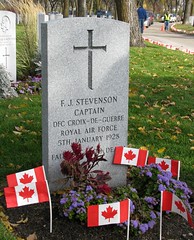
Stevenson is buried in Brookside Cemetery. If you visit his grave you will notice that it is situated differently than those surrounding it. That's because it was arranged that his headstone would face the soon to open airfield that would eventually be named for him.
Air Travel Takes Off
 Ad from Sept 1940 Winnipeg Tribune
A significant first for Stevenson Field came on February 2, 1931 when Northwest Airways began international flights of both passengers and mail between Winnipeg and Pembina, North Dakota. It made Stevenson Field Canada's first international airport.
From the time it opened, the area around Stevenson Field was a buzz of activity. Commercial and military hangars sprang up as did training schools and support industries. There was also the constant upgrading of infrastructure, from runways to roads, needed to service them.

Ad from January 9, 1932
Not a lot of thought was given to the comfort of waiting passengers. "Passenger Terminals" were just a lean-to next to the hangar.
In 1931 the Western Canada Airways hangar, said to be the largest west of the Great Lakes, burned down after barely a year of service. In the plans for a new hangar, architect Arthur Stoughton incorporated a separate passenger waiting area that housed a ticket office, customs office, post office and other amenities.
In 1936, Trans-Canada Airlines was formed and a new hangar was constructed (the present home to the Western Canadian Aviation Museum) and that is where the main passenger waiting area went.
In 1931 the Western Canada Airways hangar, said to be the largest west of the Great Lakes, burned down after barely a year of service. In the plans for a new hangar, architect Arthur Stoughton incorporated a separate passenger waiting area that housed a ticket office, customs office, post office and other amenities.

In 1936, Trans-Canada Airlines was formed and a new hangar was constructed (the present home to the Western Canadian Aviation Museum) and that is where the main passenger waiting area went.
 ca. 1950s Stevenson Aerodrome (source)
Though the new waiting area eased some of the congestion, it was clear that more needed to be done.
By 1955 there were 20,000 passengers using the airport each month. By 1960 there were 35,000 and Stevenson Field was the sixth busiest airport in the country. (Winnipeg Free Press, July 2 1960)
Airlines using the airport included Trans-Canada, Canadian Pacific, TransAir and Northwest. It was also a crew change and refueling stop for some international Scandinavian Air and Pan Am flights. Aside from civilian traffic, Stevenson Field also had to deal with the largest number of military flights of any civilian airport in the country. It was also home to numerous civilian and military flight training centres.
Airport Safety

July 1933
Despite the heavy traffic and large number of novice flyers, Stevenson Field had an excellent safety record. In the vicinity of the field crashes were rare and usually meant damaged planes rather than death.

May 19, 1950 (source)
Even in this spectacular 1950 Lancaster accident, which crashed on take-off, all 11 crewmen escaped.


In 1950 an RCAF de Havilland Vampire crashed into the back yard of a Collegiate Street home killing the owner and seriously injuring the pilot.
In February 1957 a Mitchell Bomber crashed onto Collegiate Street just 500 metres from the runway. It damaged several homes but the body of the plane came to rest in an empty lot. Nobody was killed.
The Romance

Source: eBay
With the dawn of the jet era, the increasing popularity of air travel was about more than just getting from point A to B in the quickest way possible. One ‘old airport hand’ told the Free Press (February 1, 1960) “I don’t know what it is, but the minute they walk though that gate they (passengers) seem to change. They sort of swell up with importance … they sort of strut.”
Ushering in the Jet Age
By the mid 1950s the jet age had arrived in the budget estimates of Ottawa, who ran most of the country's airports. Tens of millions of dollars were spent each year to upgrade runways and to build new airport facilities. In 1957 it would be Winnipeg's turn.

In preparation for the changes to come, in 1958 title for the lands were transferred to Transport Canada (who would now run all major civilian airports in Canada) in 1958 they requested that the name of the existing facility be renamed the Winnipeg International Airport.
Related:
Winnipeg Tribune photos of Stevenson Field
Subscribe to:
Posts (Atom)