Local News Links:... .........................

Wednesday, 20 January 2010

Streets / Dumplings Part 3: At Home on Home !

Updated July 2016

This post is made up of background material I gathered for an article on the history of Home Street, between Portage Avenue and Sargent Avenue, for the Jan / Feb 2010 edition of the now defunct community newspaper West Central Streets.


According to Mosaic, one of the "bibles" of Winnipeg street name origins, Home Street is named for Robert H. Home. Born in Ontario, he came to Manitoba to farm in the Virden area around 1883 and served in a variety of civil servant positions, including as deputy sheriff for the Central Judicial District based in Portage la Prairie. He served as sheriff from 1916 to 1939.

This claim is doubtful as the first mentions of Home Street in local newspapers appear in 1882, the year before he arrived in Manitoba. There appears to be no prior connection between Mr. Home and Winnipeg.

Map of area c.1910 (source)

West Central Winnipeg streets had two very distinct personalities until the early 1900s.

South of Portage Avenue, the land was part of the HBC reserve and much of it had been doled out over the years as river lots. The proximity to the Assiniboine River meant access to water for irrigation and transportation route. The land owners did well.

A small community formed, focused around the Parish of St. James near the river. This is still the legal name of the area used in land documents.

Portage Avenue was the dividing line between the old HBC land and the province of Manitoba. Cut off from the river, this area remained little more than pasture land for decades to come.

October 1882 Manitoba Free Press

In 1881, the area around Home Street became part of the city of Winnipeg after the city's boundaries were extended from what is now Maryland Street to around present-day St. James Street.

Once gobbled up by the city, landowners began to sell off their property as extremely valuable urban lots. The city graded what was first called Home Avenue, (the city didn't come up rules as to what was called a "street" or an "avenue" until the 1890s), in the summer of 1882.

In 1882, ads by auctioneer J.S. Coolican touted the sale of at least 1,000 lots along Home. between Portage Avenue and Notre Dame, indicating that successful these auctions were is unclear as the ads continued for months. Most of the plots would have been purchased as speculative properties.

Grading a street does not make it a great place to live. In 1883 there are no addresses listed on Home. By 1888 there were just 15 people living on Home, all clustered around Portage Avenue.

February 9, 1911 Winnipeg Free Press

In 1911 Home Street nearly lost it's name ! 

Home and Horne streets were in the same proximity. The names, especially when hand-written, were often confused for each other. The last straw came in February 1911 when a case of beer was mistakenly delivered to the home of a prominent Temperance Union member on Home Street rather than the eager beer drinker on Horne Street. 

A fuss was raised and council agreed to rename one of the streets. Likely because they did not want to further inconvenience the temperance leader, they chose to rename Horne to Evanson. 

At the same time they changed the name of another pair of streets that were often confused: Victor and Vickers. Vickers was renamed Huntleigh.
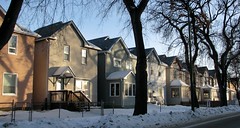
Home Street

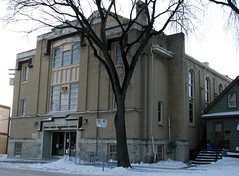
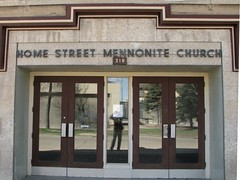
Home Street Church

Home Street Mennonite Church

Home Street Church began as a small mission at the corner of Home and Livinia (now St. Matthews), an offshoot of St. Stephen's Presbyterian Church. In 1907 under the leadership of Hugh John Robertson they became a stand-alone Presbyterian congregation. Their small building was moved to this site in 1909.

The congregation continued to grow and the church hired architect John H.G. Russel to deisign a new one. In 1920 the current Home Street Church opened, (click image above to read the full souvenir program). A group called the Winnipeg Bergthler Church, founded in 1957, purchased the building in 1973 and changed their name to the Home Street Mennonite Church. 

A Titanic Connection


A pair of real estate agents who sold a great deal of land along Home Street when it was subdivided in 1906 were Waugh and Beattie.

By 1911
Richard Waugh, (also see), had become Mayor of Winnipeg. Thomson Beattie then took over the company and was doing so well that he took a luxury European vacation in the winter of 1912. On his return in the spring, he wrote to his mother in Winnipeg that he would be “changing ships and coming home in a new, unsinkable boat." it was the RMS Titanic.

Beattie made it into one of the last lifeboats but died of exposure in the Atlantic. He was 36 years old.
 More images of Home Street (see the gallery here)
Home Street
Home Street
Home Street

Tuesday, 19 January 2010

Streets / Dumplings Part 2: Snippets of Simcoe St.

This post is material gathered for an article on the history of Simcoe Street in the Oct / Nov 2009 edition of West Central Streets. Guest editor Melanie Murray and I took a walk together to look at some of the sites and people from Simcoe's past.


Simcoe Street is most likely named for the first L.G. of Upper Canada and Toronto’s founding father, John Simcoe.


The portion of the street north of Portage was carved out of the parish of St. James in 1900 when a sidewalk was added to the west side of a gravel trail. The following year saw the paving of Simcoe from Ellice to Portage.

The surrounding area was on its way transforming from a fairly rural area, consisting mainly of farms with some industrial sites like lumber mills and metal yards, into a residential neighbourhood.

Map of area c.1910 source

In 1905, Simcoe Street had just 25 homes between Portage and Wellington avenues. Many of these were likely the dwellings of residents who worked in the area. They had occupations such as labourers, a dairyman, a carpenter, and a shoemaker.

 
Bakery Tender, Simcoe and Ellice Nov 1905

In 1905 - 1906 the redevelopment of Simcoe into a modern suburban street began to take place. Ads ran in newspapers for residential lots in the $300 range and for brand new houses.

By the end of 1906, Simcoe boasted 100 homes between Portage to Wellington. By 1908, there were 210.


Simcoe Street Walk
At number 261 we find Mrs. Henry who gave piano lessons.


One of the most interesting sites on Simcoe Street was number 226, the “Salvation Army Neglected Kids House”.

On February 5, 1909, this house became the site of Canada’s first Juvenile Court. Justice Thomas M Daly, also Brandon’s first Mayor, would travel to the house to hold court. (For more on the first juvenile court.)

Today, a Burger King stands on the spot.


Simcoe Street Walk
Throughout its development Simcoe appears to have remained a middle / working class street and included a number of social agencies and missions.

The
Norwegian Anglican Church and St. Margaret's Mission, (ca. 1912), was at the corner of Livinia and Simcoe. It is now a tot lot.

Another interesting home was that of the Lockart family at 368. There is a wonderful story on the Pier 21 website (see above) about Irish children who arrived in Winnipeg and were taken in by the Lockarts while they learned to adapt to a new country. You can read their account here.
Sadly, that site is now a modern apartment block.


Simcoe Street Walk
Simcoe Street Walk
597 Simcoe 1932

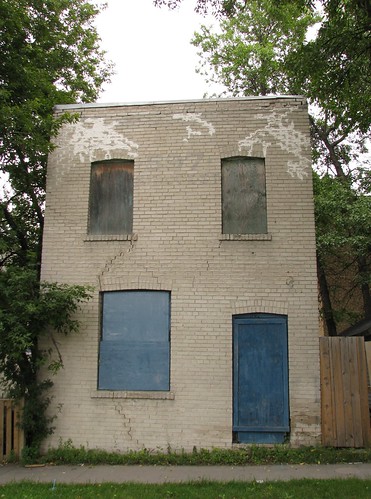
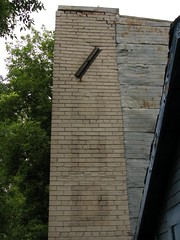
One building that intrigued us was number 597, the only commercial looking structure facing Simcoe. If you look on the side you can barely see the word 'laundry' .

After some digging I found that it is circa 1912 and was first home to the St. Paul Chinese Laundry owned by the Lee family. It continued on until the the early 30's when it was known as Wong Hop Laundry .


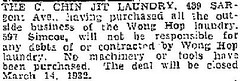
A neighbouring Chinese laundry purchased the business in 1932 but moved the work to their original premises on Sargent Avenue. The Simcoe Street building was put up for sale. After a couple of years of no takers as a laundry, it contents were emptied out and it was listed as general office space for sale or rent.


597 Simcoe 1937

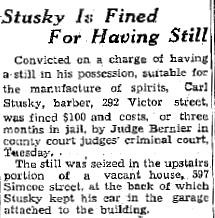
In 1937, an enterprising barber was busted for using the upstairs of the building to run an illegal still while the main floor remained vacant.

Later that year, single-sentence classified ads appeared selling used items such as baby carriages, washing machines, car parts, and sometimes entire vehicles. These ads continued with no contact name associated with them until 1953.

More Images from Simcoe Street (my full gallery is here):


Simcoe Street Walk
Simcoe Street Walk
Simcoe Street Walk
Simcoe Street Walk
Simcoe Street Walk

Thursday, 7 January 2010

Paging Dr. Finkleman !

© 2010 Christian Cassidy

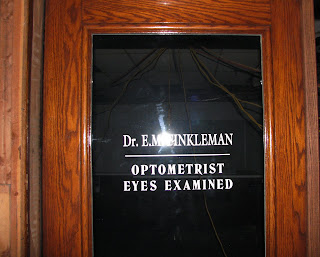
For decades, I remembered seeing the old 'Eyes Examined - Contact Lenses Fitted' sign in the second floor window of the Avenue Building. In recent years, the portion with the doctor's name has fallen away but I can remember it was Dr. Finkleman.

Emanuel Marcus Finkleman was born in Winnipeg in 1909 and graduated from the U of M in 1930 before moving to Toronto to study optometry. In 1932, he returned to Winnipeg and set up practice with his brother, Sidney A. Finkleman, in a 500 square foot space on the second floor of the original Kensington Building on Portage Avenue at Smith Street.

In a 1981 Free Press story, Finkleman said that as a rookie doctor with no collateral he couldn't have opened a practice during the Depression without the help of A. C. Whittecker of the Imperial Optical Company who "threw out the rule book" to help him the equipment he needed.


Dr. E. M. Finkleman was a leader in his profession. He served as president of the Manitoba Association of Optometrists (1953-1954) and led the Canadian Association in 1962. Outside of his practice, he was a governor of the National Theatre School of Canada, a member of the board of the National Arts Centre and a member of the Jewish Historical Society.


A fire at the Kensington Building in December 1972 led to its demolition sent the Finklemans scrambling to find a new location. By the end of the month, they set up shop two doors down on the second floor of the Avenue Building.

In the mid 1990's the Avenue Building closed and after 50 years on Portage Avenue. Finkleman moved to an office on Provencher Boulevard. He practised until a month before his death on March 21, 2001 at the Health Sciences Centre. At 92, he was the longest-serving optometrist in Canada.

https://www.flickr.com/photos/christiansphotos/4239123314/in/album-72157600329961986/

I could not find more information about Dr. Sidney A. Finkleman. He was listed in street directories into the 1960s, (which are the latest directories available online), and is included in ads for the practice right up to its 1986 relocation to St. Boniface.

Sidney is not mentioned in items related to his brother, such as that 1981 Free Press story or even his obituary. Sidney died in 1987 according to this geni page.

Sunday, 3 January 2010

The Halters of Winnipeg (Part 3)


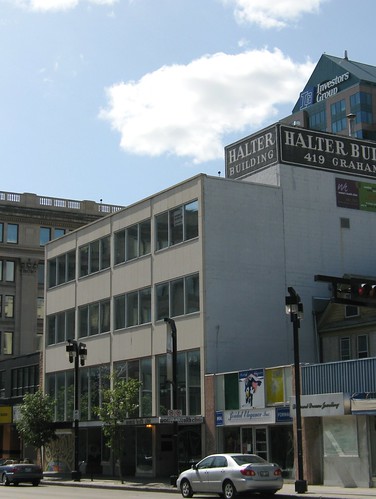
Halter Building

 June 1960 Halter Building Ad

Aubrey Halter and Nola Brown met in the late 1950's and their first partnership revolved around the arts.

In 1960, Nola Brown felt that it was the right time for a 'modern' bookstore in Winnipeg, one dealing in literature and art. She told the Free Press "we hope to bring back to Winnipeg the fullest tradition of the personal book store" (Dec. 8 1960).

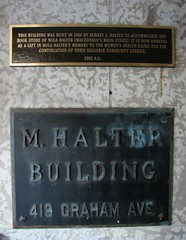
Aubrey Halter had just opened the four-storey Halter Building on Graham Avenue, just a block from The Bay. The main floor retail included Ellerby and Hall Chemists and the upper floor office tenants included Occidental Life Insurance Company, an optician, and CBC administration.


December 8, 1960, Winnipeg Free Press

The second main floor retail space became home to Nola's Macdonald's bookstore which opened on December 9, 1960, just a few days after her father, Francis Roy Brown, died. The "book and arts centre" was a bookstore, magazine shop, art gallery, and carried a record section featuring folk and "off beat" albums.

It may have been a precursor to today's mega-bookstores but was ahead of its time. Macdonald's declared bankruptcy in July 1962.


Source: Reese Halter

On January 18, 1963, Aubrey and Nola were married.

From 1966 to 1989, the couple lived at the Sures House at 1021 Wellington Crescent. They had
three children: Dr. Reese Halter, a California-based conservation scientist; Jason Halter, a Toronto-based artist and art dealer; and Diana, who lives in British Columbia.

May 27, 1989, Winnipeg Free Press

Nola continued as a book reviewer and a media personality, including a stint as a panellist on the CTV / CJAY quiz show "Twenty Questions" that debuted in 1961. Her co-panellists included Stewart McPherson (right) who went on to host the UK version and numerous other BBC shows, and Edna 'Rassy' Ragland (bottom), Neil Young's mother.

Aubrey continued with his role as a sometimes controversial developer, tangling often with the city over zoning matters, especially with the construction of 221 Wellington Crescent.

December 1987, Winnipeg Free Press

The Halters continued to be supporters of the arts. They sat on many boards and fundraising committees, including for the Winnipeg Humane Society, Manitoba Theatre Centre, and Winnipeg Symphony Orchestra.

Another group favoured by the couple was the Women's Health Clinic. The clinic opened in 1981 on the other side of Graham, but in 1987 they moved to the Halter Building.
The Halters donated the building to the clinic in 2004.

Halter Building

Nola Peveret Halter (née Brown) died in in Vancouver on March 25, 1998.

Aubrey Halter died October 21, 2008 at the age of 90.

Abandonments

A blog that I began following this year is BlogTO. It's a mix of everything urban from the Little Apple - from food to art to urban politics.

I have to give a shout out to the latest post contributed by Jonathan Castellino called  Recalling A Year of Abandonments with some incredible and haunting photos of abandoned buildings he took this year in Toronto and region.

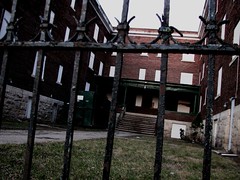
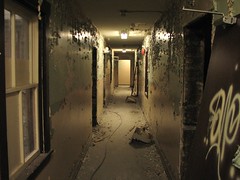
I thought I would share a few of my abandoned shots as well. Nothing as grand as Castellino's but some interesting places. (For the record, I gained access to these buildings by invite or because they were open during an event. I do not gain entry by breaking and entering or otherwise causing damage to the building).


Abandoned Apartment Building on Burnell:
512 Burnell
512 Burnell
512 Burnell
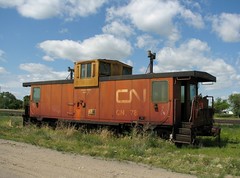
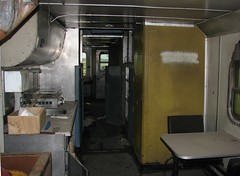
CN Caboose outside Rivers MB:
Abandoned CN Caboose
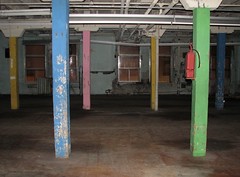
McDermot Avenue Warehouse:
Exchange District
Exchange District
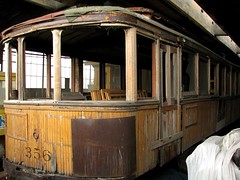
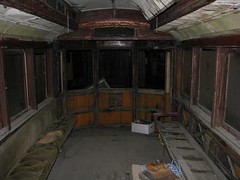
Streetcar 356:
Streetcar 356
Streetcar 356
Streetcar 356
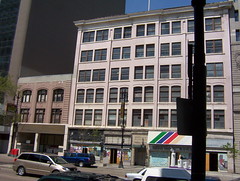
The Avenue Building:
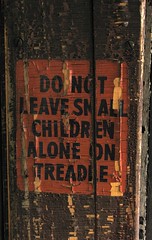
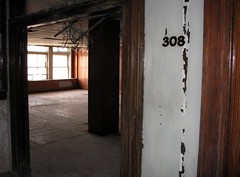
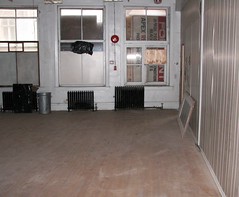
Avenue Building The Avenue Building The Avenue Building
The Avenue Building
Rex Theatre on Main Street (now demolished):
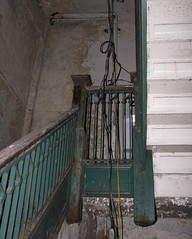
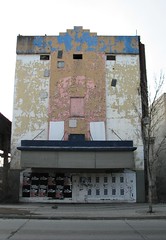
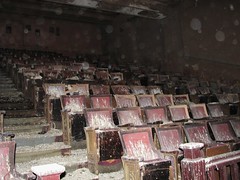
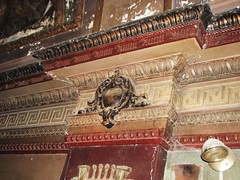
Rex Theatre, Winnipeg  (1912 - 2008) Rex Theatre, Winnipeg  (1912 - 2008) Rex Theatre, Winnipeg  (1912 - 2008) Rex Theatre, Winnipeg  (1912 - 2008)