UPDATED: April 3, 2016
Thanks to everyone who enjoyed this post.
I recently had the chance to do more research on the topic and the beefed-up version with a number of corrections can be found in my Winnipeg Free Press article: The Path of Most Resistance. Other notes can be found at the accompanying blog post.
Saturday, 28 November 2009
Sunday, 22 November 2009
Chaplin's Back In Town !
Charlie Chaplin's 1931 romantic comedy "City Lights" is coming to the Concert Hall with the original score performed by the full Winnipeg Symphony Orchestra. One show only: Thursday November 26 at 8 pm.
City Lights is considered by many to be Chaplin's best work and still ranks highly among Hollywood classics.
It was a Chaplin project from beginning to end. He produced, directed, edited, wrote the score and most of the screenplay and, of course, acted in the lead role in his 'Tramp' persona. He bankrolled it to the tune of $1.5m and shot it almost entirely on his own studio lot.
'Silent pictures' were a becoming a thing of the past and Chaplin knew his Tramp's antics wouldn't translate well to talkies. That is why he provided a full orchestral score.
There was great anticipation here for this movie.
It was three years in the making and fans were desperate to see Chaplin back on screen. Local newspapers carried wire stories from LA and New York that included rave reviews which only heightened the anticipation.
City Lights opened at the Garrick Theatre on April 24, 1931. The following day, a review in the Manitoba Free Press said: "'City Lights' is the best work of a cinema genius. See it by all means and take your children".
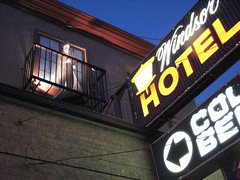
Chaplin is said to have a few Winnipeg connections. Did he stay at the Windsor Hotel? Did he play the Playhouse Theatre? Did he leave here to go directly to Hollywood? I separate fact from myth at this blog post!
Friday, 20 November 2009
1919 Stanley Cup final cancelled and the death of Brandon's Joe Hall
© 2009, 2018 Christian Cassidy
The 1918-1919 Stanley Cup final between the Montreal Canadiens and Seattle Metropolitans was played under the shadow of an epidemic. "Spanish" influenza, which targeted young, healthy individuals, was being transmitted around the globe by troops returning home from World War I.
The championship series took place in late March in Seattle and lasted a hard-fought five games, including two that went into overtime. (The March 26 contest went to double overtime before being called a draw and the Canadiens won the March 31 overtime battle to force the deciding game on April 1st.)
The Canadiens, who stayed at a hotel across the border in Victoria B.C., had their lineup ravaged by influenza during the series. On the eve of the final game there were only three players, Pitre, Cleghorn and Vezina, reported as healthy.
At 2:30 pm on April 1, 1919, tournament organizers had little choice but to announce that the final and deciding game was postponed.
Initially, there were attempts to downplay the illness. An April 3 telegram to Canadian media supposedly sent by by Canadiens' Team Manager George Kennedy said that the team was doing well with a few members "under the weather". (It likely wasn't Kennedy as by that time his wife had been summoned to be by his bedside due to the severity of his illness.)
Things went from bad to worse as members of the Metropolitans also began falling ill
Sports fans were stunned by the announcement on April 5, 1919, that 37-year-old Canadiens defenseman Joe Hall of Brandon, Manitoba had succumbed to influenza.
Any hopes of resuming the final game was put to rest and "Series not completed" was engraved on the Stanley Cup for the 1918 - 1919 season.
A later victim was manager Kennedy who never fully recovered from the effects of influenza and died in 1921 at the age of 39.
More About Brandon's Joe Hall
Hall was born in Stafforshire, England in 1882 and his family came to Brandon, Manitoba when he was a young boy. He began making the local sports pages in 1900 as a race-winning cyclist. A couple of years later, his name became synonymous with hockey.
Hall earned the nickname "Bad Joe Hall" early in his career due to being a tough and sometimes dirty player. He spent a fair bit of time before governing bodies and watching his teams from the stands while under suspension.
One early instance was in a January 1904 game at the Winnipeg Auditorium as a member of the Brandon Rowing Club team. Some in the crowd were taunting him with calls of "butcher" and "lobster" for his dirty play and Hall made "an alleged breach of etiquette towards the audience". That 1904 Brandon team went on to challenge for the Stanley Cup final but lost to the Ottawa Silver Seven.
Hall was offered a pro contract with Portage Lake of the International Hockey League in Houghton, Michigan but turned it down to keep the Brandon lineup intact for another shot at Stanley Cup glory.
In November 1905, Hall finally went to Portage Lake but his time in the IHL was brief.
In one of his first games on December 14, 1905, he was ejected for chopping a player with his stick. A couple of games later, against the same team, he went on a verbal tirade using profanities against a referee who then sent him off. When his outburst continued off the ice, the opposing team walked off in protest and forfeited the game. The management of the team said that he would be barred from ever entering their arena again.
Hall was back in Manitoba the following season. (It appears that he was not banned from the IHL, but a restructuring of the Canadian leagues allowed players to be paid to play in Canada rather than have to take up with cross-border teams of the IHL.)
Hall was part of the Brandon lineup that lost in the new Manitoba Hockey League finals to the Kenora Thistles.
Hall's saving grace, aside from the fact that he could be a good hockey player when he put his mind to it, was that he was considered a gentleman off the ice. A good-natured family man who never got in trouble and avoided newspaper interviews.
The president of the Pacific Coast League said that "Off the ice he was one of the jolliest, best-hearted, most popular men who ever played." A Free Press writer agreed, saying that to those who knew him off the ice he was "Good Old Joe Hall".
Hall played the 1910-11 season in the Quebec Hockey Association. He was perhaps beginning to mellow with age as he found his name in the papers more often for being a game star rather than for suspensions.
Hall was part of the Stanley Cup winning Quebec Bulldogs in 1912 and 1913.
A 1913 wire story said that Hall had a "unique position in the hockey world". His reputation meant that players were either wary of him or underestimated his hockey abilities, which gave him room on the ice to shine. His one drawback was the constant battle to keep himself from responding to the slashes and hits of opponents looking for the old Joe Hall.
In November 1917, the Montreal Canadiens picked Hall up from Quebec and he found himself playing in the starting line at times. In one January 1918 game, the Habs beat Ottawa 5 to 3 and Joe was the game star scoring three goals, including the game winner.
Hall's Canadiens won the 1919 National Hockey Association championship which is what saw the team off to Seattle to play the Pacific Coast League champs for the Stanley Cup.
Despite playing for teams across the country, Brandon remained home-base for Hall where he resided with wife Mary and their three children. He worked for the railroad on the off-season and invested some of his hockey salary in real estate around Brandon.
When it was clear that Hall might not recover from influenza, Mary was summoned from Brandon to be by Joe's bedside in Washington State. She, along with Hall's mother and sister, left immediately but they did not make it in time. A telegram informed them of his death en route.
Initial plans were to have Hall's body shipped from his place of death, the Columbia Sanatorium in Washington State, via Vancouver to Brandon for burial, but his final resting place ended up being Vancouver.
The hockey community rallied around Joe's family. A trust fund was set up for the widow and children and "Joe Hall Memorial Week" games were played throughout the province to raise funds. There was a game in Montreal as well.
The Winnipeg game featured all-stars from various Winnipeg-based teams playing against all-stars from teams outside of Winnipeg.
In all, Hall's professional career spanned 18 years. He was inducted to the Hockey Hall of Fame in 1961.
Related:
The 1918-1919 Canadiens' ourhistory.canadiens.com
Joe Hall Hockey Hall of Fame
Hall's Death Reminder of 1919 Flu Canwest Aug 26, 2009
The 1918-1919 Stanley Cup final between the Montreal Canadiens and Seattle Metropolitans was played under the shadow of an epidemic. "Spanish" influenza, which targeted young, healthy individuals, was being transmitted around the globe by troops returning home from World War I.
The championship series took place in late March in Seattle and lasted a hard-fought five games, including two that went into overtime. (The March 26 contest went to double overtime before being called a draw and the Canadiens won the March 31 overtime battle to force the deciding game on April 1st.)
The Canadiens, who stayed at a hotel across the border in Victoria B.C., had their lineup ravaged by influenza during the series. On the eve of the final game there were only three players, Pitre, Cleghorn and Vezina, reported as healthy.
April 2, 1919 Winnipeg Free Press
At 2:30 pm on April 1, 1919, tournament organizers had little choice but to announce that the final and deciding game was postponed.
Initially, there were attempts to downplay the illness. An April 3 telegram to Canadian media supposedly sent by by Canadiens' Team Manager George Kennedy said that the team was doing well with a few members "under the weather". (It likely wasn't Kennedy as by that time his wife had been summoned to be by his bedside due to the severity of his illness.)
Things went from bad to worse as members of the Metropolitans also began falling ill
Sports fans were stunned by the announcement on April 5, 1919, that 37-year-old Canadiens defenseman Joe Hall of Brandon, Manitoba had succumbed to influenza.
Any hopes of resuming the final game was put to rest and "Series not completed" was engraved on the Stanley Cup for the 1918 - 1919 season.
A later victim was manager Kennedy who never fully recovered from the effects of influenza and died in 1921 at the age of 39.
More About Brandon's Joe Hall
Hall earned the nickname "Bad Joe Hall" early in his career due to being a tough and sometimes dirty player. He spent a fair bit of time before governing bodies and watching his teams from the stands while under suspension.
One early instance was in a January 1904 game at the Winnipeg Auditorium as a member of the Brandon Rowing Club team. Some in the crowd were taunting him with calls of "butcher" and "lobster" for his dirty play and Hall made "an alleged breach of etiquette towards the audience". That 1904 Brandon team went on to challenge for the Stanley Cup final but lost to the Ottawa Silver Seven.
Hall was offered a pro contract with Portage Lake of the International Hockey League in Houghton, Michigan but turned it down to keep the Brandon lineup intact for another shot at Stanley Cup glory.
January 3, 1906, Winnipeg Tribune
In one of his first games on December 14, 1905, he was ejected for chopping a player with his stick. A couple of games later, against the same team, he went on a verbal tirade using profanities against a referee who then sent him off. When his outburst continued off the ice, the opposing team walked off in protest and forfeited the game. The management of the team said that he would be barred from ever entering their arena again.
Hall was back in Manitoba the following season. (It appears that he was not banned from the IHL, but a restructuring of the Canadian leagues allowed players to be paid to play in Canada rather than have to take up with cross-border teams of the IHL.)
Hall was part of the Brandon lineup that lost in the new Manitoba Hockey League finals to the Kenora Thistles.
Hall's 1911 Bulldogs card (eBay)
After more trouble with league officials, a Winnipeg Tribune sports editorial of December 21, 1907 noted: "Hall’s one drawback as a hockey player is his temper, which, on the ice, he appears to be unable to control. Joe possesses the qualities of a great hockey player and if he could only dampen this feature, his worth would be doubled."Hall's saving grace, aside from the fact that he could be a good hockey player when he put his mind to it, was that he was considered a gentleman off the ice. A good-natured family man who never got in trouble and avoided newspaper interviews.
The president of the Pacific Coast League said that "Off the ice he was one of the jolliest, best-hearted, most popular men who ever played." A Free Press writer agreed, saying that to those who knew him off the ice he was "Good Old Joe Hall".
January 21, 1913, Winnipeg Tribune
Hall was part of the Stanley Cup winning Quebec Bulldogs in 1912 and 1913.
A 1913 wire story said that Hall had a "unique position in the hockey world". His reputation meant that players were either wary of him or underestimated his hockey abilities, which gave him room on the ice to shine. His one drawback was the constant battle to keep himself from responding to the slashes and hits of opponents looking for the old Joe Hall.
In November 1917, the Montreal Canadiens picked Hall up from Quebec and he found himself playing in the starting line at times. In one January 1918 game, the Habs beat Ottawa 5 to 3 and Joe was the game star scoring three goals, including the game winner.
Hall's Canadiens won the 1919 National Hockey Association championship which is what saw the team off to Seattle to play the Pacific Coast League champs for the Stanley Cup.
January 6, 1920, Winnipeg Tribune
Despite playing for teams across the country, Brandon remained home-base for Hall where he resided with wife Mary and their three children. He worked for the railroad on the off-season and invested some of his hockey salary in real estate around Brandon.
When it was clear that Hall might not recover from influenza, Mary was summoned from Brandon to be by Joe's bedside in Washington State. She, along with Hall's mother and sister, left immediately but they did not make it in time. A telegram informed them of his death en route.
Initial plans were to have Hall's body shipped from his place of death, the Columbia Sanatorium in Washington State, via Vancouver to Brandon for burial, but his final resting place ended up being Vancouver.
The hockey community rallied around Joe's family. A trust fund was set up for the widow and children and "Joe Hall Memorial Week" games were played throughout the province to raise funds. There was a game in Montreal as well.
The Winnipeg game featured all-stars from various Winnipeg-based teams playing against all-stars from teams outside of Winnipeg.
In all, Hall's professional career spanned 18 years. He was inducted to the Hockey Hall of Fame in 1961.
The 1918-1919 Canadiens' ourhistory.canadiens.com
Joe Hall Hockey Hall of Fame
Hall's Death Reminder of 1919 Flu Canwest Aug 26, 2009
Wednesday, 18 November 2009
The Marlborough had a Birthday Party!
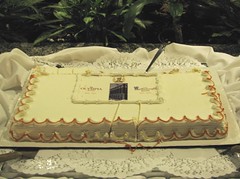
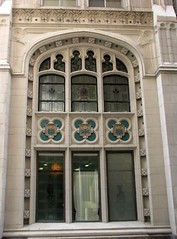
The Marlborough Hotel had a 95th birthday party and I invited myself along!
Due to my day job I wasn't able to make it right at noon but I showed up fashionably late - still in time for some cake and to meet some of the senior staff. I didn't realize that there were tours involved - oh well, the 100th is around the corner and it is usually part of Doors Open.
The Marlborough doesn't receive the attention that, say, the Fort Garry does as an historic hotel, (and to be fair the building hasn't received the same TLC). Nonetheless, whenever I go I am always struck at the attention showed to the history of the building.
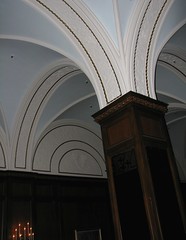
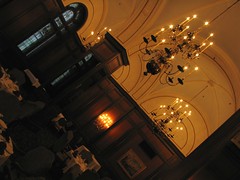
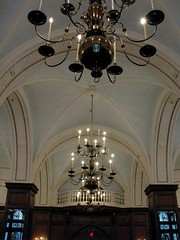
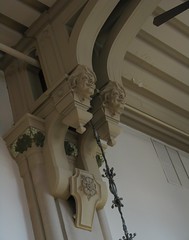
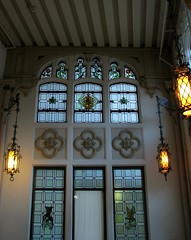
The historic eating rooms - Churchill's and Johanna's - are very well preserved and the building's history is celebrated through dozens of photographs, plaques, newspaper articles framed on the walls. Next time you pass by, or grab lunch at Johanna's as an excuse to visit, definitely take a look-see.
A couple of interesting notes:
- Churchill's is named for Sir Winston Churchill, once a guest at the hotel.
- The Royal Canadian Legion was founded at the Marlborough in 1925.
- The Winnipeg Press Club was a long-time occupant in the Olympia Room.
- The Marlborough is Manitoba's largest banquet hotel thanks to the Skyview Ballroom.
For my history of the building, see my Winnipeg Places Blog post.
Churchill's:
- Churchill's is named for Sir Winston Churchill, once a guest at the hotel.
- The Royal Canadian Legion was founded at the Marlborough in 1925.
- The Winnipeg Press Club was a long-time occupant in the Olympia Room.
- The Marlborough is Manitoba's largest banquet hotel thanks to the Skyview Ballroom.
For my history of the building, see my Winnipeg Places Blog post.


Related:
Video Tour - Winnipeg Sun
Olympia/Marlborough Hotel - Historic Building Committee Report (pdf)
Marlborough Hotel - U of M Winnipeg Building Index
Our History - The Marlborough Hotel
Monday, 16 November 2009
Ellice Avenue artwork coming along
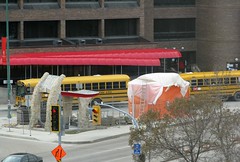
I've been watching this take shape over the past few weeks.
It's on the new 'island' created between the Ellice Avenue entrance to the U of W and the street. It will be part art, part bus shelter when it is completed according to this Uniter article.
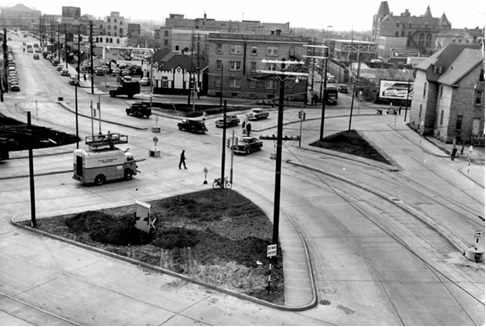
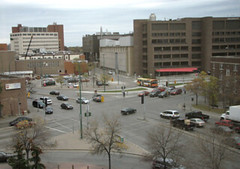
Some shots of the intersection through the decades:
It's on the new 'island' created between the Ellice Avenue entrance to the U of W and the street. It will be part art, part bus shelter when it is completed according to this Uniter article.
Some shots of the intersection through the decades:
1950:
2007:
September 2009:
November 2009:
Friday, 13 November 2009
The Winnipegger who created the CFL
© 2009, Christian Cassidy
Football Hall of Fame Card (courtesy, Reese Halter)
Syd Halter had a huge impact on the local and national sports scene, though most sports fans wouldn't recognize the name. Here's the story of the Winnipegger who brought four regional sports leagues together under a single Canadian Football League.
Gerald Sydney "Syd" Halter was born in Winnipeg on April 18, 1905, and graduated from the Faculty of Law at the University of Manitoba in 1927. As a student, he managed the Bisons hockey team and was introduced to the world of sports management.
November 28, 1938, Winnipeg Free Press
After graduating, Halter began his career in corporate law and became involved in the reorganization of the Winnipeg Football Club. He held many positions on its board, including as treasurer and president, from 1935 to 1942
Halter also had stints as president of the Winnipeg Amateur Athletic Association (WAAA) and the Amateur Athletic Union of Canada (AAUC) at both the provincial and national levels between 1931 and 1946.
As national president of the AAUC, at just 33 years of age, he was portrayed as the young upstart who was coming in to modernize an antiquated organization for a new era.
February 12, 1942, Winnipeg Tribune
Halter was president of both the Winnipeg Rugby Football Club, (soon to be nicknamed the "Blue Bombers"), and the Amateur Athletic Union of Canada when World War II began. He left to serve in an administrative capacity with the Royal Canadian Air Force and after the war resumed his law career and his interest in sports.
In 1953, Halter was elected commissioner of the Western Interprovincial Football Union (WIFU) in which the Winnipeg Blue Bombers played. It was one of four major regional leagues in the country.
Halter felt that it was time to reorganize the sport of football in Canada and that "... all matters pertinent to it at this time can be handled on a national basis under the jurisdiction of a single central office” and then made it his mission to create a single Canadian Football League.
January 18, 1958, Winnipeg Free Press
Halter invited officials from the "big four" regional football leagues operating in the county together for a conference at Winnipeg's Royal Alexandra Hotel on Main Street in January 1958 to finalize a merger deal.
The three-day closed session meeting took place between January 17 to 19th. It began with an agreement to establish the Canadian Football League, initially called the Canadian Football Commission, with G. Sydney Halter, age 52, as its first commissioner. The following two days were spent figuring out how to merge various sets of game, team, and player rules and regulations into one.
Halter guided the new league through its formative years from 1958 to 1966. (That made him the man who had to make the tough decision to halt the 1962 'fog bowl' Grey Cup final game and resume play the next day.)
After his retirement as commissioner in 1966, Halter dedicated himself to the sport of horse racing and served for two stints as chair of the Manitoba Horse Racing Commission. Under his tenure, Assiniboia Downs expanded its thoroughbred racing season from 42 to 120 days and a rural harness racing circuit was created.

After Halter's death on October 24, 1990, there was a push to have Winnipeg Stadium renamed the G. Sydney Halter Memorial Stadium. Winnipeg Enterprises, however, stood firm in its practice of not naming any of the sports facilities, (such as the stadium, arena and velodrome), under their administration.
Halter was made an Officer of the Order of Canada in 1977 and has been inducted into numerous Halls of Fame including the Canadian Sports; Canadian Amateur Sports; Manitoba Sports; Canadian Football; International Jewish Sports; Canadian Horse Racing, Winnipeg Football Club, and Canadian Olympic.
From 2003 to at least 2011, the CFL presented a G. Sydney Halter Memorial Award to an amateur official who has demonstrated officiating excellence and has made great contributions to Canadian football officiating consistently over the years.
When you sit down to watch the CFL playoffs this weekend, take a moment to remember the Winnipegger who brought the league together!
Subscribe to:
Posts (Atom)