............................

Tuesday, April 22, 2008

Do We Dare Squander….

When in Chicago I visited the Chicago Architecture Foundation.

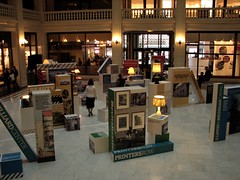
If you love cities and architecture that is a great place to spend time. They have a Cityspace Gallery with their Chicago: You Are Here display that “provides a tour of the spaces, places, and structures that define Chicago. It highlights the people who built the city, from the Sears Tower to the Illinois and Michigan Canal.”

Chicago

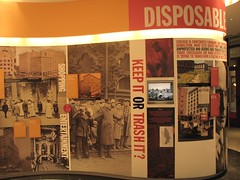
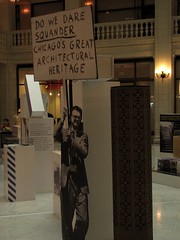
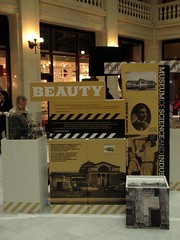
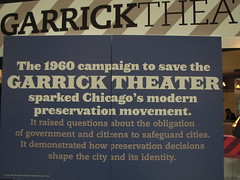
The Foundation also currently has a display entitled Do We Dare Squander Chicago’s Great architectural Heritage . The title is taken from a sign that photographer and preservationist Richard Nickel first carried in a 1961 protest to save the Garrick Theater in Chicago.

Chicago
Chicago

Nickel became the focal point of the preservationist movement in Chicago in the 60’s and 70’s when many of the city’s old theatres and office towers were being torn down. Ironically, he was killed by a staircase that fell from the semi demolished Chicago Stock Exchange building while photographing and collecting artifacts.

Chicago

The Do We Dare Squander display was not just visual. A series of public lectures, tours, videos etc. are part of it as well. Here’ an overview from the Chicago Tribune.

Chicago

I felt inspired to be in a place that celebrated and embraced its built environment like that.

Sadly in Winnipeg, which has a large collection of Chicago school buildings left, we will still gladly tear one down when a parking lot is called for.

Monday, April 21, 2008

The Latest in American Urban Design: Drive-By-Proof

I came across this today and thought it was interesting in a sad sort of way. (I think you can access the article without registration / subscription):

Bulletproof public design in L.A.. A growing movement in crime-ridden parts of L.A. incorporates safety into parks and residential architecture.
Los Angeles Times March 26, 2008

"Seniors in Steel Plaza’s retirement complex in Pico-Union sometimes like to take their morning walks in the building’s courtyard, protected by a black wrought-iron fence and perched 30 feet above the intersection of West 3rd Street and South Union Avenue.

“We’re quite safe here,” said Victor Gamad, 73, who has lived in the building since it opened a decade ago. “We never get frightened, except for when someone sets the fire alarm off.”

Steel Plaza, which opened in 1998, was designed to be “drive-by proof.”

It is one of the early examples of what has become a growing movement in urban sections of Los Angeles to blend public safety with architecture — with some surprising results."

Interesting Urban Spaces ? The Faux Village Mall.

This caught my eye in the Winnipeg Free Press:

Village-style retail mecca planned; Open-air project set for arena site
Winnipeg Free Press Apr. 16 2008
Winnipeg shoppers may soon get a taste of the kind of open-air, village-styled shopping centres that are becoming all the rage in other parts of North America.

On my recent trip to the U.S. I came across a couple of these “villages” back to back in San Marcos - a city half way between Austin and SA.

I guess what I found interesting is that there IS demand for walkable, easy to navigate spaces with “town centres.” Instead of revitalizing or incorporating that into their cities they use it as a template for shopping centres.

This seems to be a particular problem for 'Interstate towns'. There there are 1000’s of them and they've all morphed over the decades into being 15 km long and 500m wide on each side of the roadway. Driving into the older areas of these town, many of them underused or abandoned, you see how the Interstate completely changed how these cities developed.

I was doing work in the Yukon. The big tourist draw was Anchorage Alaska, a city which had torn down most of its old buildings and then rebuilt new ones to look old. A few minutes over the border there’s Carcross, YK which has the real thing: century old saloons with swinging doors, old livery stables, ancient housing stock and the remnants of a roadhouse just outside the town. These were the 'real McCoy' but attracted few tourists !

Funny that we will recreate what we want to have rather than working towards preserving or maintaining the real thing.

Sunday, April 20, 2008

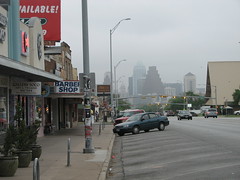
Interesting Urban Spaces Part 2 - Austin’s South Congress District

A huge thing Austin has going for it is fun.

Keep Austin Weird” is the unofficial city logo and you’ll see it on billboards, shirts etc. You can see from their website that they track everything from strange art exhibits (including back yard art) to film showings.

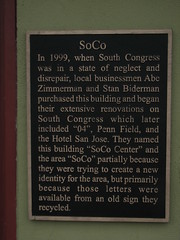
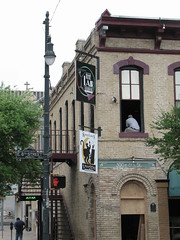
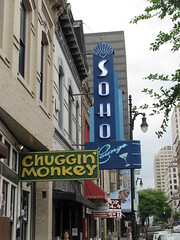
The SoCo (South Congress) district is an example of that fun spirit. Similar to Osborne village in the type of shops and restaurants, setting, clientèle and closeness to the downtown core.

Austin South Congress

From talking to the folks that worked at the motel I stayed in, 30 years ago SoCo was one of the most crime ridden, dangerous parts of Austin. That brought land values down and artists, small “quirky” businesses and other entrepreneurs moved in due to low land values (sound a little like our Main / Higgins today or Osborne Village of the 70’s ?).

Austin Texas - South Congress

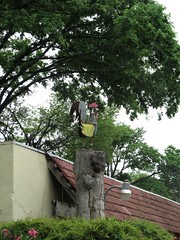
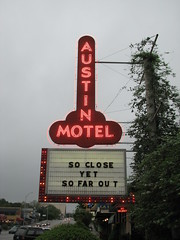
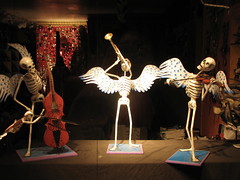
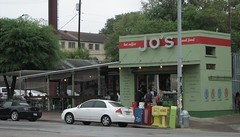
The shop owners along Congress go out of their way to have fun with it – it definitely keeps some of the ‘weird’ in Austin with their attitude and signage ! Among them were the Austin Motel owners - from quirky art to fun attitude - I highly recommend the place if you are ever in Austin.

Austin Motel

Austin Texas - South Congress

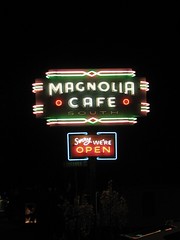
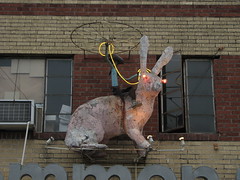
Some more of the fun attitude that is part of "SoCo":

Austin Texas - South Congress

Austin Texas - South Congress

Austin South Congress

Austin Texas - South Congress

Austin Texas - South Congress

Austin Texas - South Congress

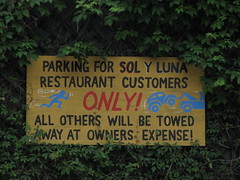
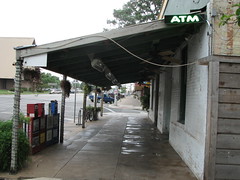
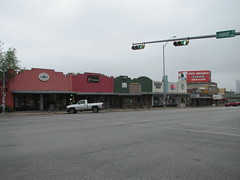
From an urban space point of view, South Congress has its good and bad. For bad, the street is very wide at that point (6-8 lanes). On one side they allow vertical parking that gave the impression of a narrower street. Oddly, sidewalks are extremely narrow and in some places disappear all together into dirt or, as below, ends completely when the restaurant sets up their patio. I found it an odd problem not to fix - too much street and too little sidewalk !

Austin Texas - South Congress

Austin Texas - South Congress

Austin Texas - South Congress

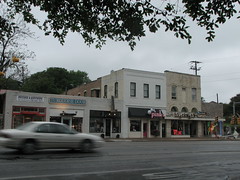
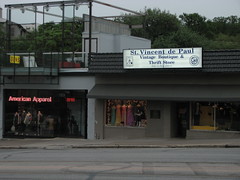
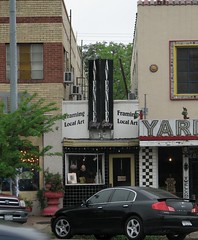
The retail was a mix of the mundane and the truly neat. In almost all cases they were built to the sidewalk with only the odd empty lot or building set back from the street.

Austin Texas - South Congress

Austin Texas - South Congress

Austin Texas - South Congress

Austin Texas - South Congress

Austin Texas - South Congress

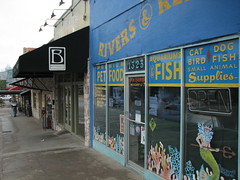
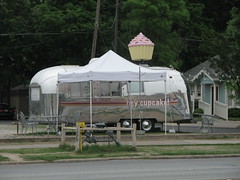
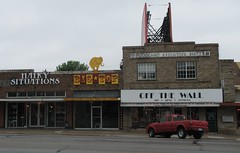
I really liked this pairing of stores:

Austin Texas - South Congress

Austin South Congress

Austin South Congress

The district was surrounded by residential. That, too, was mixed. Some gentrified properties, some exclusive looking condos. I doubt that too many of the old residents are still living in the ‘hood.

Austin Texas - South Congress

Austin Texas - South Congress

Austin Texas - South Congress

All in all there was nothing incredibly unique about the area - similar areas exist over and over in North American cities - but it had a great, fun feel to it making it a great urban space.

Thursday, April 17, 2008

Interesting Urban Spaces part 1 - Austin’s 6th St. & Warehouse District

Austin Texas - Warehouse District

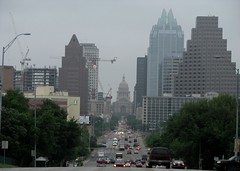
I recently went to Corpus Christi, Texas for a family gathering. I decided to fly into Austin given that so many folks consider it a ‘city of the future’ - Richard Florida, Glen Murray et al.

From what I can remember of Florida’s “The Creative Class” Austin took what it had, a university town with a rep for great live music, and made a conscious gamble that the future was not in bricks and mortar, financial incentives for manufacturers and other traditional urban infrastructure. Instead, tehy thought that the future was in people.

Give young people a cool, interesting, wi-fi’d, ‘weird’ place to live would not only keep them there but attract like-minded people. Once you had a certain concentration of those types of folks the “new economy” companies (IT, ad agencies etc.) would come and seek Austin out as a place that would make their companies a success.

Some of that worked. Dell and other IT companies, ad agencies and others have headquartered there. People who graduate from the U of T tend to stay put after graduating making Austin one of the most 'intelligent' cities in NA by education levels. Because these jobs pay well they have a better than average income compared to other NA cities. It's also one of the youngest NA cities in terms of population.

Austin went from 465,000 in 1990 to 650,000 in 2000 and by 2010 it’s projected to be 800,000 - in other words, they get about 20,000 additional people per month residing there.

Here's a little tour of Austin and comparison to some of Winnipeg's spaces:

Austin Texas - 6th Street

First off is 6th Street. It’s a strip of bars, shops, clubs that usually feature live music, jams, and cheap beer.

An interesting area that features a mix of rich and poor, old and young. What I thought was interesting, though, is that the strip that made Austin famous as a music city is not all that done up. It resembles Winnipeg’s Selkirk or Main Street more than the Exchange or Calgary’s Stephen Ave.

I did note that there wasn't a lot of people living immediately in the district. It is surrounded by some hotels and for the most part office buildings.

Austin Texas - 6th Street
There are a lot of open air bars (windows that open onto the streets) with few patios due to narrow sidewalks. There are very few parking lots or vacant lots.

It all made for a nice, walkable strip.

I did not get the sense that it was overly planned or funded (other than the city obviously did not allow the strip to be torn down). It just seemed to sort of "happen".
Austin Texas - Warehouse District

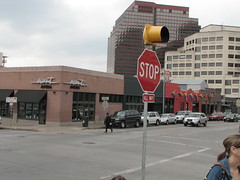
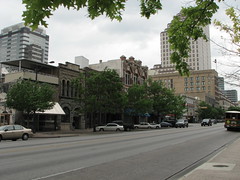
The adjacent 'Warehouse District' of Austin featured clubs, galleries and theatres. It was very low density and a mix of styles with wide streets. If it wasn’t for the light post banners you wouldn’t really know you were in a special area of the city.
Austin Texas - Warehouse District

Again, what struck me is the similarity to Selkirk Avenue. A space that was allowed to happen but not necessarily featuring spectacular surroundings.

it certainly made me think about some of these walkable, historical streets that we have and their potential.

Monday, April 14, 2008

Thoughts on The Winnipeg Stadium debate

Winnipeg Stadium

Winnipeg is in the midst of another facility debate. Whether to accept David Asper’s proposal to take over the publicly owned Blue Bombers and their stadium, plus a couple of hundred million in taxpayers' money.
A new stadium would be nice for the city and eventually there will be a true need for one. Considering we recently reached into the infrastructure pot for a major sports facility with the MTS Centre that should be 'it' for a long while to come.

The stadium seemed fine, though in need of some renos, when suddenly it went to the top of the chart with a bullet as one of the city's main infrastructure priorities. The Bombers even claim that the stadium is now crumbling. All in the space of a few months ?

The stadium surely has a few years left in it. Best thing is to start planning now for a new stadium, both financially and physically. If selling / leasing part of all of the land is to be part of a plan then look into that first. Find out what the potential sale price would be or, heck, even sell a plot on one or two of the corners and put that into a new stadium fund.

Winnipeg Stadium

As the “owner”the city should step up efforts to ensure the current facility is well maintained so that the users don't aid in the shortening of its life through neglect.

Do some fact finding on what other cities have done recently and take any good points / best practices from them so you’re not making a decision in a vacuum.

Get a series of detailed proposals in. From there, narrow it down to one or two contenders on the basis of location, who pays for what and the overall value to the Bombers and city sports community.

My concern is that NONE of the above will be done. All the eggs are in one basket, some political leaders and Bomber folk have a finger over the panic button about the need for a new stadium.

The Asper proposal might go ahead but might not be the best fit for the city. Alternatively, the proposal could hit the bin and the debate will completely disappear from the scene until part of the deck falls off a few years down the road and then we’re back in a panic with someone coming forward with a single deal / take it or leave it proposition.

We have some great facilities / amenities in this city but this “herky-jerky” system we use when it comes to planning for their renewal or replacement almost guarantees that we’ll never get the best outcome, except by fluke.

A combination of the best bang for the buck and things that residents will be proud of for more generations to come.